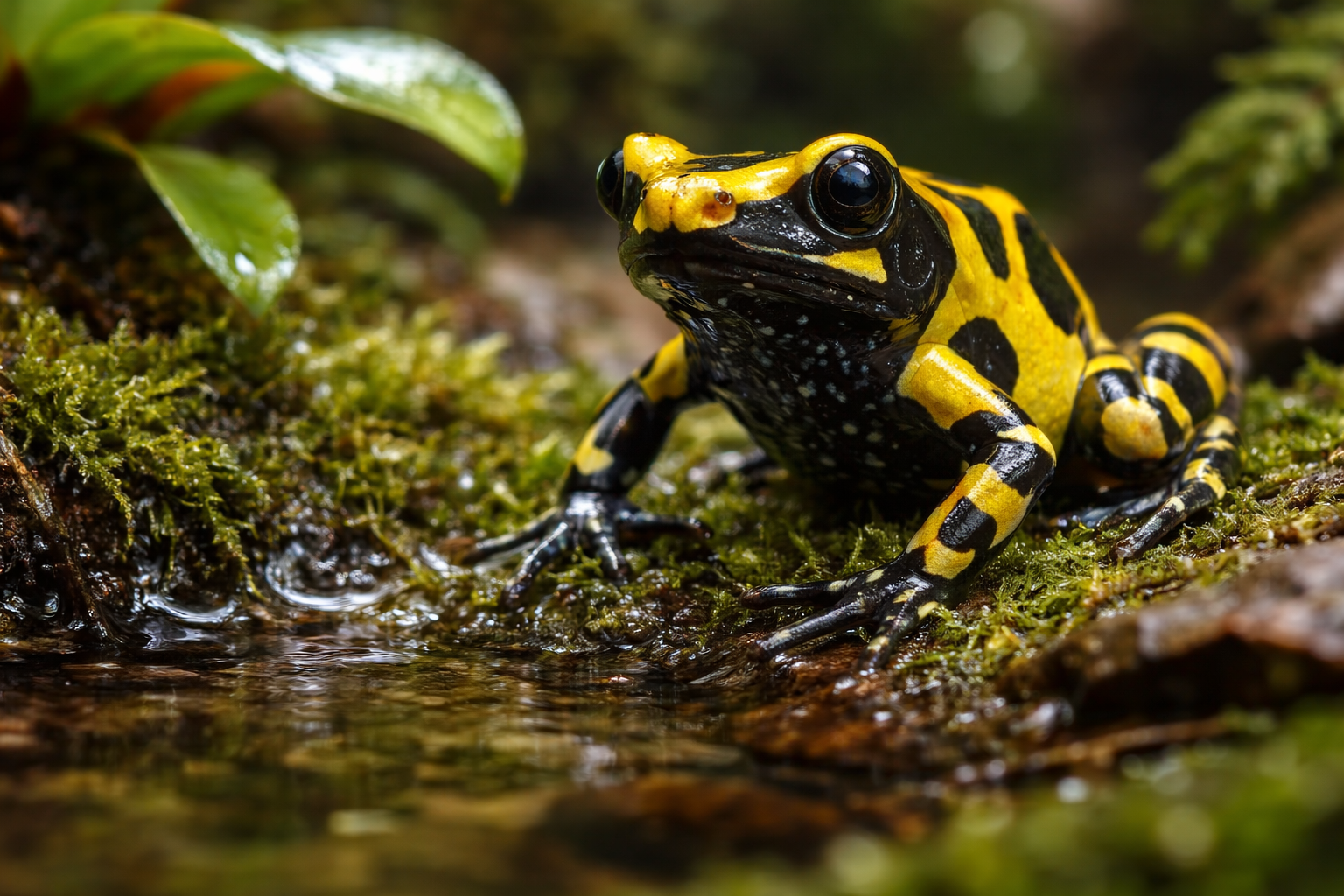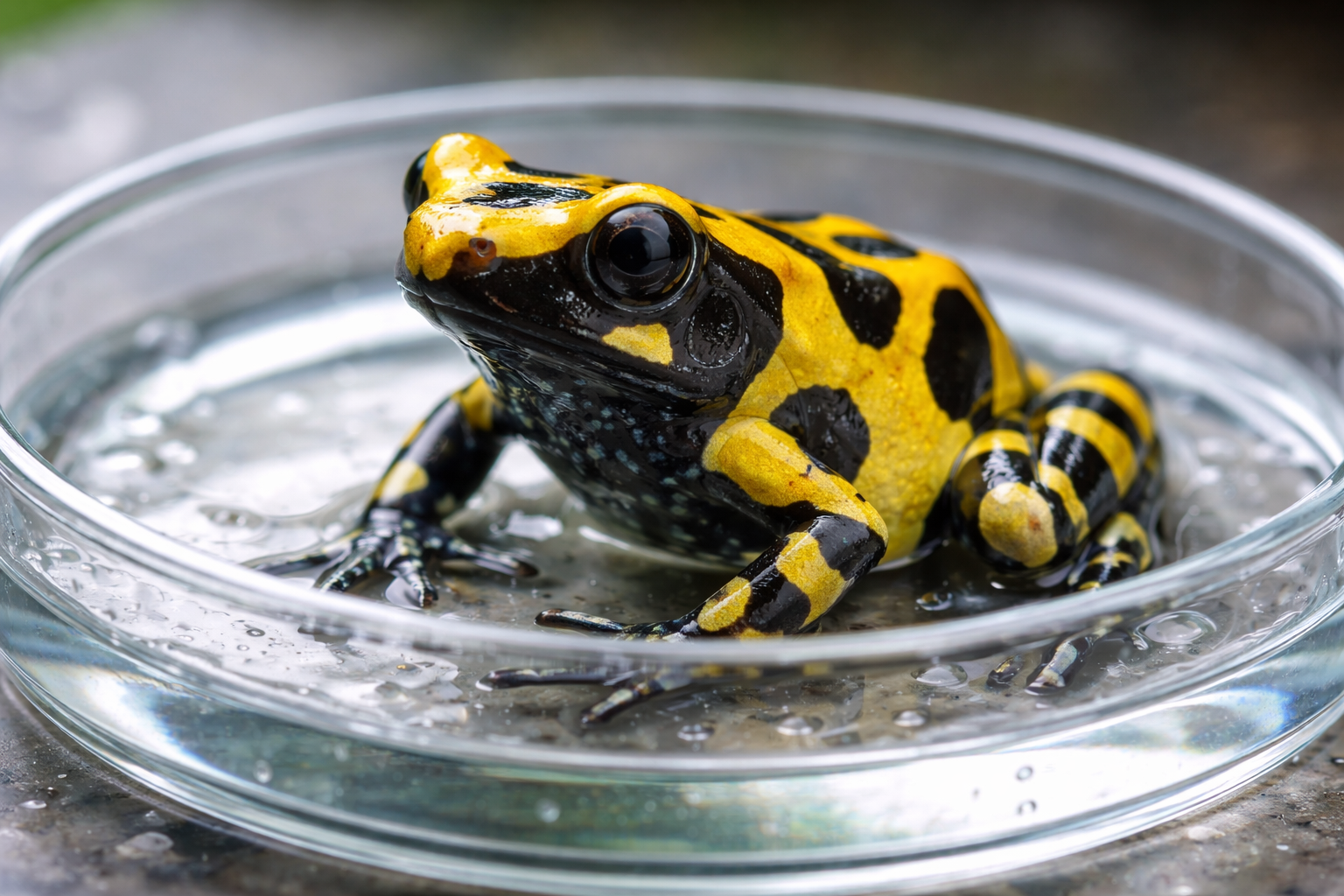

Every now and then, a piece of frog research comes along that genuinely makes you stop and think, “nature is absolutely wild.” This is one of those moments.
Scientists have now reported that certain frogs and wasps have independently evolved pain-causing molecules that work in a very similar way. Even more interesting, these molecules closely resemble bradykinin, which is a compound involved in pain and inflammation in vertebrates.
In simple terms, two completely different kinds of animals appear to have arrived at a very similar chemical defence strategy. One is an amphibian. One is an insect. Neither inherited this exact solution from the other. Yet both ended up using a similar biochemical trick to make predators think twice.
What did researchers actually find?
The study looked at pain-inducing peptides found in frogs and in wasps. These peptides are described as bradykinin-like, meaning they behave in a similar way to bradykinin, a naturally occurring molecule involved in pain signalling and inflammation in vertebrates.
When a predator encounters one of these toxins, the result can be immediate discomfort, irritation, or pain. That is obviously a very effective way of discouraging another attack. If a predator learns that biting or grabbing a certain animal causes a nasty reaction, it is more likely to avoid that species in future.
That alone would be interesting, but the bigger story is this: the researchers found that these molecules did not all come from one shared evolutionary origin. Instead, similar pain-causing compounds appear to have evolved independently in different lineages.
Why this matters: convergent evolution in action
This is a brilliant example of convergent evolution. That is when unrelated animals evolve similar traits because they are facing similar pressures in the real world.
Think of it like evolution solving the same problem twice.
If a wasp needs a way to make predators back off, and a frog needs a way to make predators back off, then a pain-causing toxin is clearly a very effective answer. The two groups are massively different, but natural selection can still push them towards similar outcomes.
That is one of the reasons this study is so fascinating. It suggests that evolution is not always a completely random wandering path. Sometimes, when the pressure is strong enough, different animals can arrive at remarkably similar solutions.
Why frogs are so interesting in toxin research
Frogs have always been incredible from a chemical point of view. Many species rely on skin secretions for defence, and some of the most famous examples are of course poison frogs.
Bright colours, warning signals, defensive chemistry, and predator deterrence all come together in frogs in a way that feels almost unreal. They may be small, but they are not defenceless. In many cases, their survival depends on making themselves a very bad idea to bite.
This new research adds another layer to that story. It shows that frog defensive chemistry is not just diverse, but also part of a much bigger evolutionary pattern. Similar defensive molecules can appear again and again in nature when they are useful enough.
Does this mean pet dart frogs are dangerous?
Not in the way people often imagine.
Captive-bred dart frogs are generally considered non-toxic in practical terms because they do not consume the same wild diet that contributes to toxin sequestration in nature. Wild toxicity and captive husbandry are two very different things.
That is still one of the most misunderstood parts of dart frog keeping. The bright colours remain, the beauty remains, and the evolutionary history remains, but the real-world husbandry context is completely different from life in the rainforest.
So no, this is not a reason for panic. It is a reason to appreciate just how extraordinary frogs are from an evolutionary point of view.
Why this is exciting for frog keepers
If you keep frogs, build vivariums, or just love amphibians, this sort of study is a reminder that frogs are not “simple” animals. They are the product of millions of years of evolutionary fine-tuning.
Every colour pattern, behaviour, skin secretion, breeding strategy, and habitat preference tells part of that story.
That is why frog keeping can be so rewarding. You are not just caring for a small exotic pet. You are observing a living animal shaped by some of the most elegant and complex survival pressures in the natural world.
And occasionally, science gives us a fresh glimpse into just how advanced those survival systems really are.
The bigger takeaway
The most exciting part of this discovery is not just that frogs and wasps share a similar pain-causing strategy. It is that nature appears to keep returning to the same idea because it works.
When unrelated animals independently evolve similar defensive molecules, it tells us something powerful: certain solutions are simply too effective not to appear again.
That makes frogs even more fascinating than they already were.
And for those of us who already love them, that is saying something.
Source and attribution
This article was inspired by recent science reporting from Phys.org covering new research on pain-causing toxins in frogs and wasps, alongside supporting material released by The University of Queensland. The underlying research was reported as being published in Science. Full credit for the original news coverage and scientific reporting belongs to the respective authors and publishers.
This Frogfather post is a plain-English summary and commentary intended for educational purposes.