
Description
Ranitomeya quimpichari Dart Froglets for Sale UK
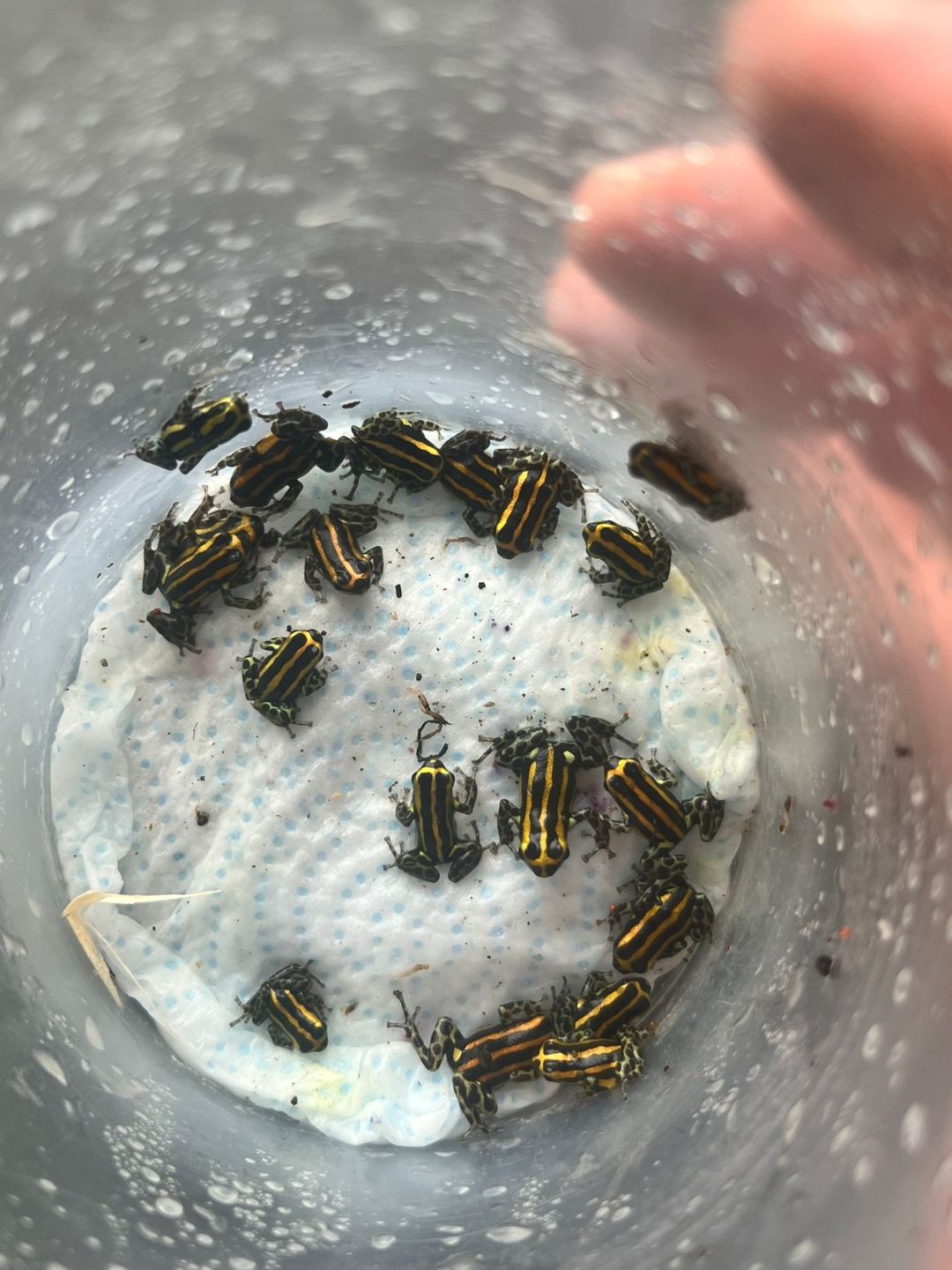
Ranitomeya quimpichari dart froglets available
This is a stunning thumbnail dart frog species, known for its bold striped patterning and high activity levels. These frogs are a fantastic addition to a well-established bioactive vivarium and are especially appealing to keepers looking to expand into more advanced or visually striking dart frog species.
About Ranitomeya quimpichari
Ranitomeya quimpichari is a small South American dart frog species with a distinctive dark base colour, overlaid with vivid yellow to orange striping. As they mature, they develop into highly active frogs that utilise vertical space, making them perfect for planted vivariums with climbing structure.
They are often considered a “thumbnail” species, meaning they stay relatively small but make up for it with behaviour, colour, and presence.
Care Requirements
These dart frogs require a stable, humid, and well-planted environment that replicates a tropical rainforest microclimate.
- Temperature: 22–25°C (stable, no extremes)
- Moisture: species-appropriate humid refuges and useful ventilation; mist according to actual enclosure conditions
- Setup: Bioactive vivarium with leaf litter, cork, moss, and dense planting
- Ventilation: Essential to prevent stagnation
- Water: Clean, shallow access or moisture-rich environment
As with all dart frogs, stability is key. Avoid rapid swings in temperature or humidity.
Feeding
Froglets should be fed appropriately sized live foods such as:
- Springtails
- Small fruit flies (D. melanogaster)
All feeders should be dusted regularly with a high-quality supplement. A balanced, all-in-one vitamin and mineral supplement can be used on every feed to support proper development and long-term health.
Key Details
- Species: Ranitomeya quimpichari
- Life Stage: Froglets
FAQ
Are these suitable for beginners?
They are better suited to keepers who already understand dart frog care, as thumbnail species can be slightly more sensitive to environmental changes.
Can they be housed with other dart frog species?
Mixing species is generally not recommended unless you fully understand the risks. A species-only setup is the safest approach.
What size enclosure do they need?
A well-planted enclosure with vertical space is ideal. These frogs make good use of climbing areas and foliage.
What do froglets eat?
They require very small live foods such as springtails and fruit flies, dusted with supplements.
Ranitomeya social note: some Ranitomeya are maintained successfully in compatible groups, but social behaviour varies by species and individuals. Monitor mature groups for exclusion, persistent aggression and unequal access to food or breeding sites.
Social Housing & Behaviour Review
Last reviewed: 5 September 2026
Poison-frog social systems differ substantially between species and can also change with sex, maturity, breeding condition, enclosure structure and individual temperament. A group that appears stable as juveniles may not remain compatible after sexual maturity.
Do not treat “pair”, “trio” or “group” as a universal stocking rule. Provide visual barriers, multiple feeding and refuge areas, monitor body condition and behaviour, and have a separate suitable enclosure available if persistent chasing, wrestling, exclusion from food or shelter, weight loss or other signs of incompatibility develop.
Evidence & further reading
- Rojas & Pašukonis (2019) – natural history and aggressive behaviour in Dendrobates tinctorius
- St Claire et al. – husbandry and care of dendrobatid frogs




