
Description
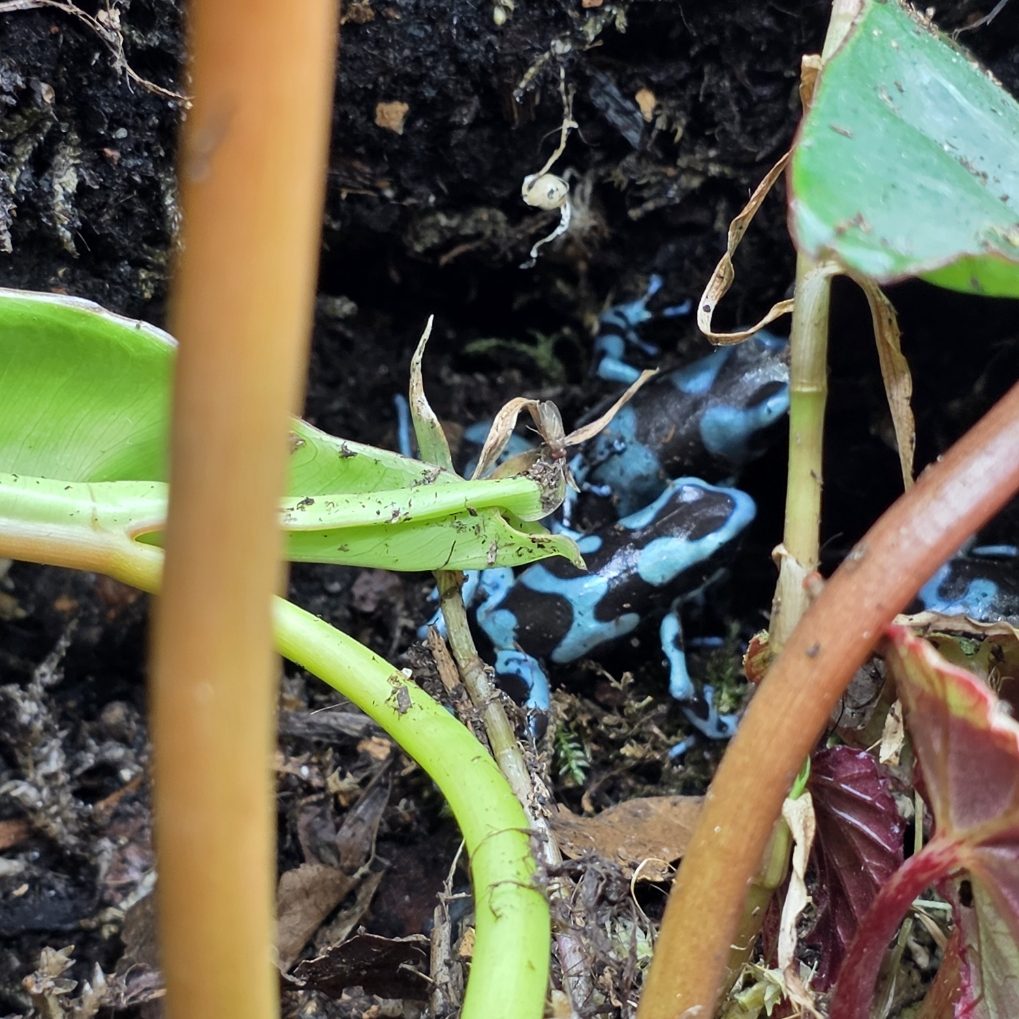
Highland Bronze Dendrobates auratus – Captive-Bred Juveniles
Captive-bred juvenile Highland Bronze Dendrobates auratus, showing the metallic bronze and darker patterning characteristic of this line.
Experience level
We previously described this species as “hardy”, “forgiving” and beginner-friendly. Those terms can understate the consequences of poor amphibian husbandry. D. auratus can be very rewarding captives, but still require reliable live food, supplementation, suitable temperature, ventilation and moisture management.
Social housing
Some D. auratus are maintained successfully in compatible groups, but group housing is not guaranteed to remain stable as juveniles mature. Provide visual barriers, multiple feeding/refuge areas and a separate suitable enclosure if aggression or exclusion develops.
Environment
Provide a planted enclosure with substantial leaf litter, cover, useful ventilation and access to wetter and drier microhabitats. Do not maintain a permanently saturated enclosure simply because the species comes from humid habitats.
Feeding
Offer appropriately sized live prey and an evidence-informed supplementation programme. Springtails in the enclosure can provide additional tiny prey but do not replace deliberate feeding.
Live-Animal Husbandry Review
Last reviewed: 5 September 2026
Environmental ranges, stocking density and social compatibility should be matched to the species, life stage and individual animals. Frogfather therefore avoids fixed humidity targets, universal pair/trio formulas and “hardy/beginner-proof” wording.
Evidence & further reading
- St Claire et al. – husbandry and care of dendrobatid frogs
- Rojas & Pašukonis – social and aggressive behaviour in Dendrobates tinctorius




