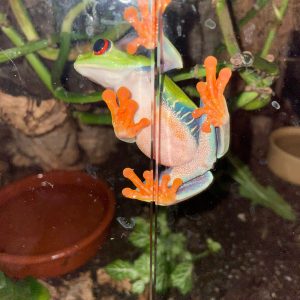

Description
Dendrobates tinctorius ‘Azureus’ Tadpoles – Captive Bred UK
Captive-bred Dendrobates tinctorius tadpoles for keepers who want to raise this dart frog through metamorphosis.
Core husbandry
- Water: use clean, species-appropriate water. Dechlorinated water may be suitable depending on local chemistry; RO should be appropriately reconstituted/remineralised rather than assumed ideal untreated.
- Feeding: offer small amounts of a diet appropriate to this species and stage. Frogfather commonly uses suitable finely milled tadpole foods and other appropriate prepared foods; remove uneaten material before it deteriorates.
- Water changes: use sensible partial changes according to waste load and water condition rather than a fixed universal percentage or daily schedule.
- Temperature: Frogfather commonly raises comparable dendrobatid tadpoles around approximately 22–25°C, but this is a practical husbandry range rather than a scientifically established optimum for every population.
- Metamorphosis: development rate varies with temperature, nutrition, genetics and individual tadpoles. We do not guarantee a fixed number of weeks.
Individual or group rearing?
At Frogfather we commonly rear many dart frog tadpoles individually because it makes feeding, development and water quality easier to monitor and avoids competition or physical interactions. This is a practical husbandry method, not a universal requirement for every species.
Botanicals
Catappa/Indian almond leaf or other suitable botanical material can be used as part of the rearing environment and may provide tannins, surfaces and developing biofilm. We do not claim that it medically protects tadpoles, prevents infection or automatically “improves water quality”.
Transition to froglet
As forelimbs emerge and the tail begins to resorb, provide an easy, secure route out of the water and prepare a suitably humid, ventilated froglet grow-out enclosure with appropriately tiny live food available.
Adult note
Adult Azureus are a locality/morph of D. tinctorius. Their eventual enclosure and social arrangement should be chosen around adult behaviour rather than the tadpole-rearing container.
Live animal note: availability and dispatch are subject to animal condition, weather and suitable welfare-compliant transport arrangements.
Tadpole Husbandry & Evidence Review
Last reviewed: 5 September 2026
Tadpole diets, water chemistry, temperature tolerance, social behaviour and development rates vary substantially among amphibian species and through larval development. Fixed recipes and development times on this page are therefore presented only as Frogfather husbandry starting points where relevant, not universal biological requirements.
Published amphibian work also shows that water composition can influence larval development. Untreated reverse-osmosis water should not automatically be assumed preferable simply because it is pure; where RO is used, use a suitable reconstituted/remineralised approach for the species and rearing system.
Evidence & further reading
- Pryor (2014) – tadpole nutritional ecology and digestive physiology
- Ferrie et al. (2014) – Nutrition and Health in Amphibian Husbandry
- Higgins et al. (2021) – water composition, supplementation and spindly-leg syndrome in Andinobates geminisae