Description
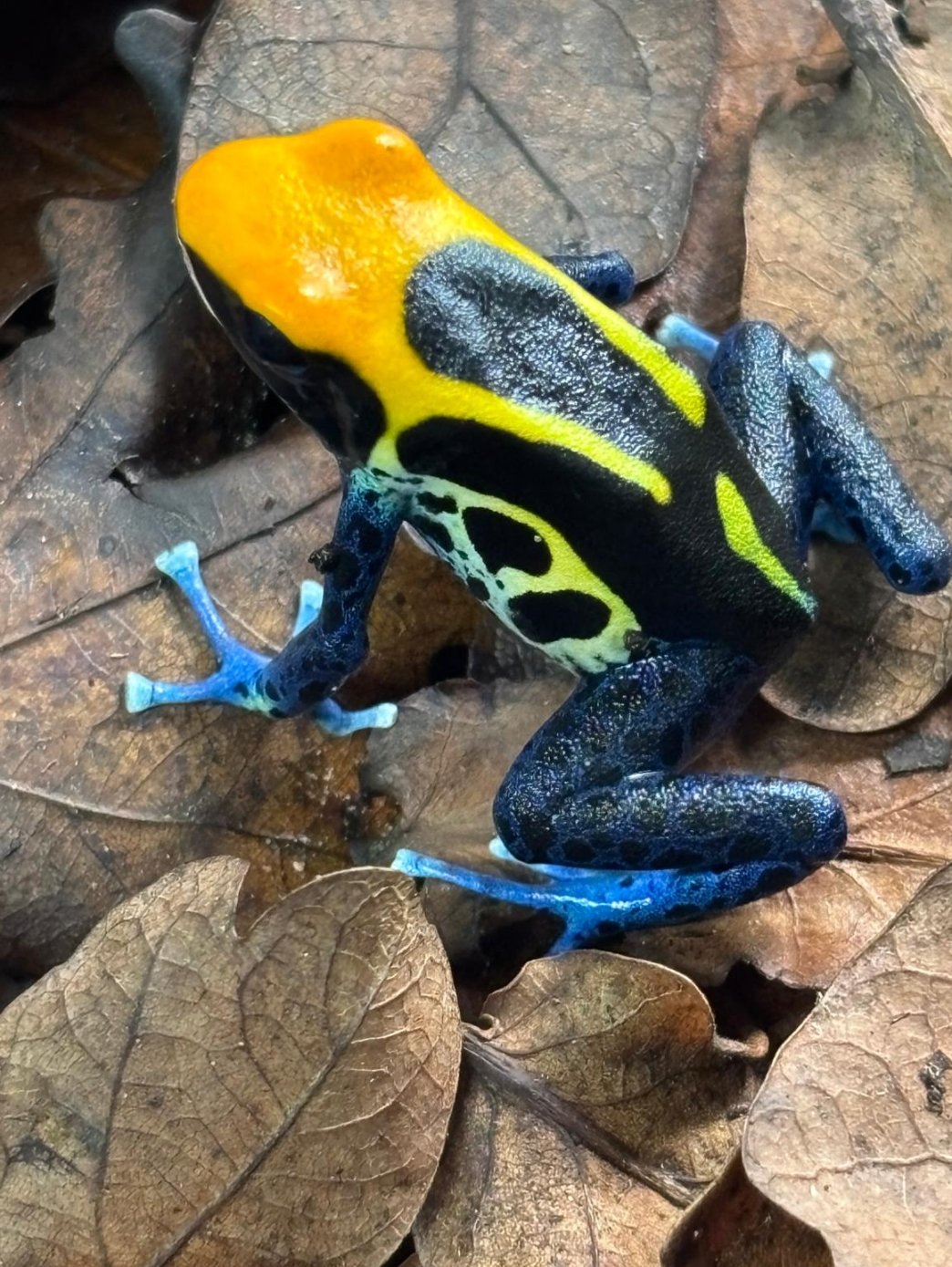
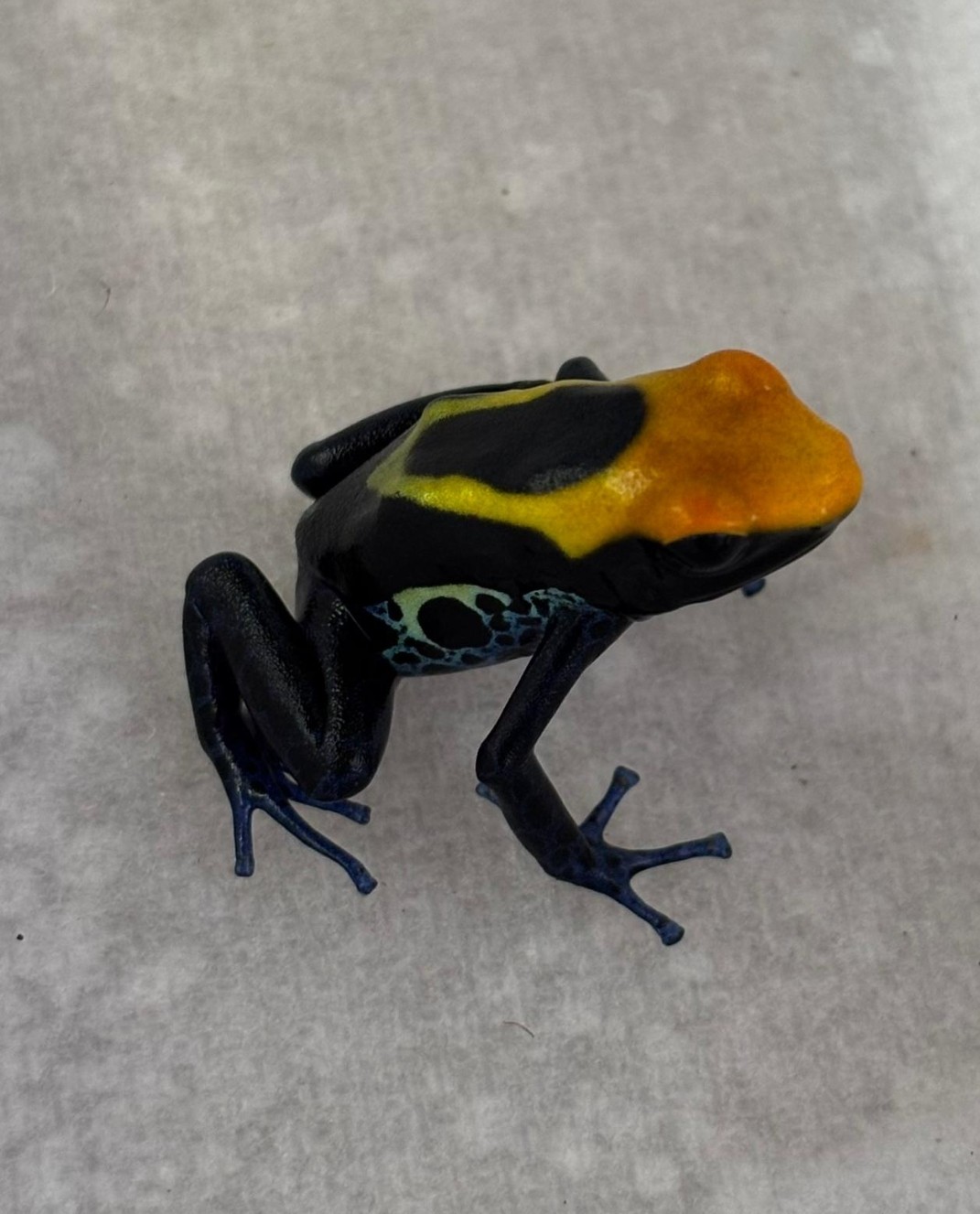
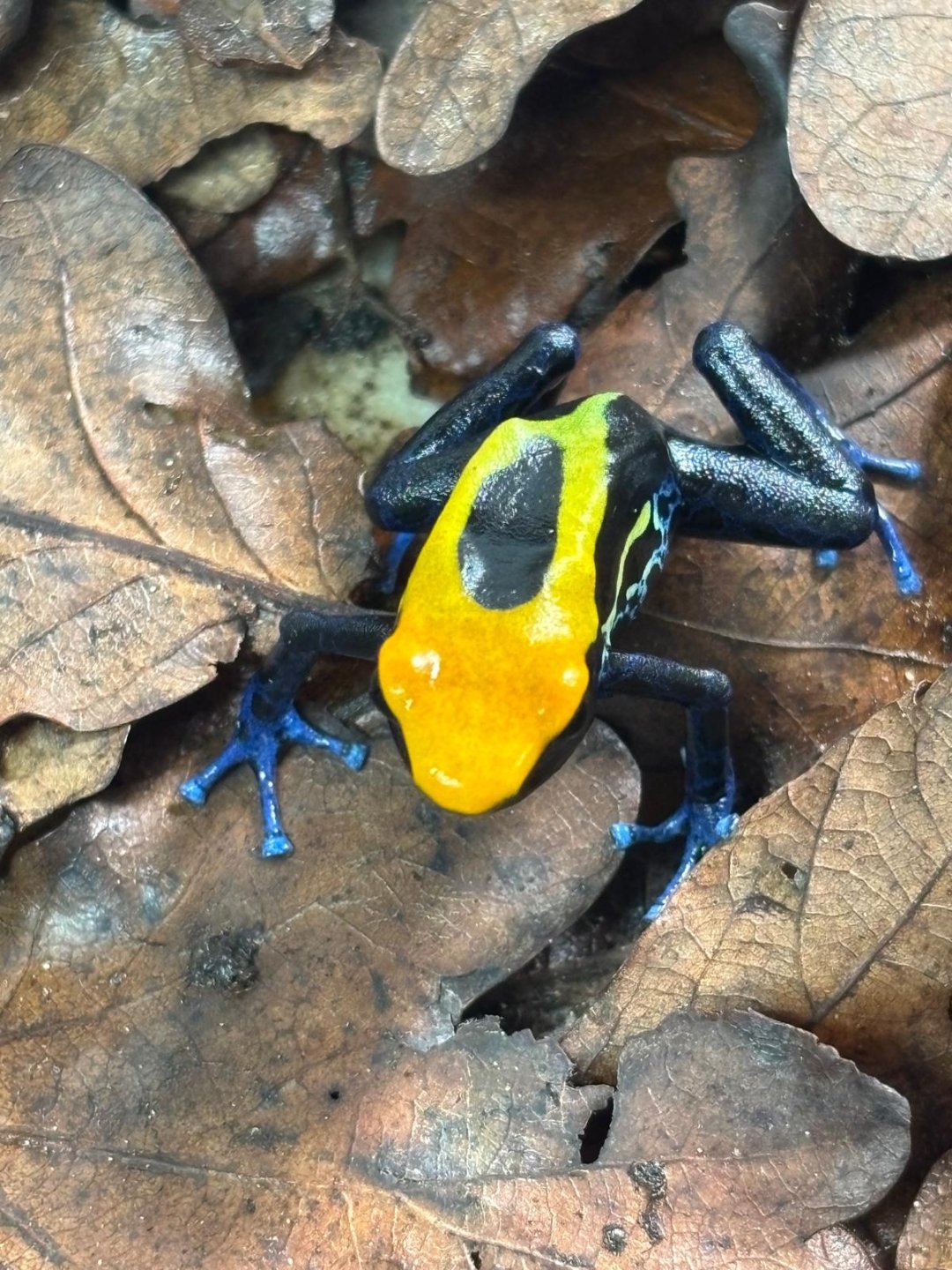
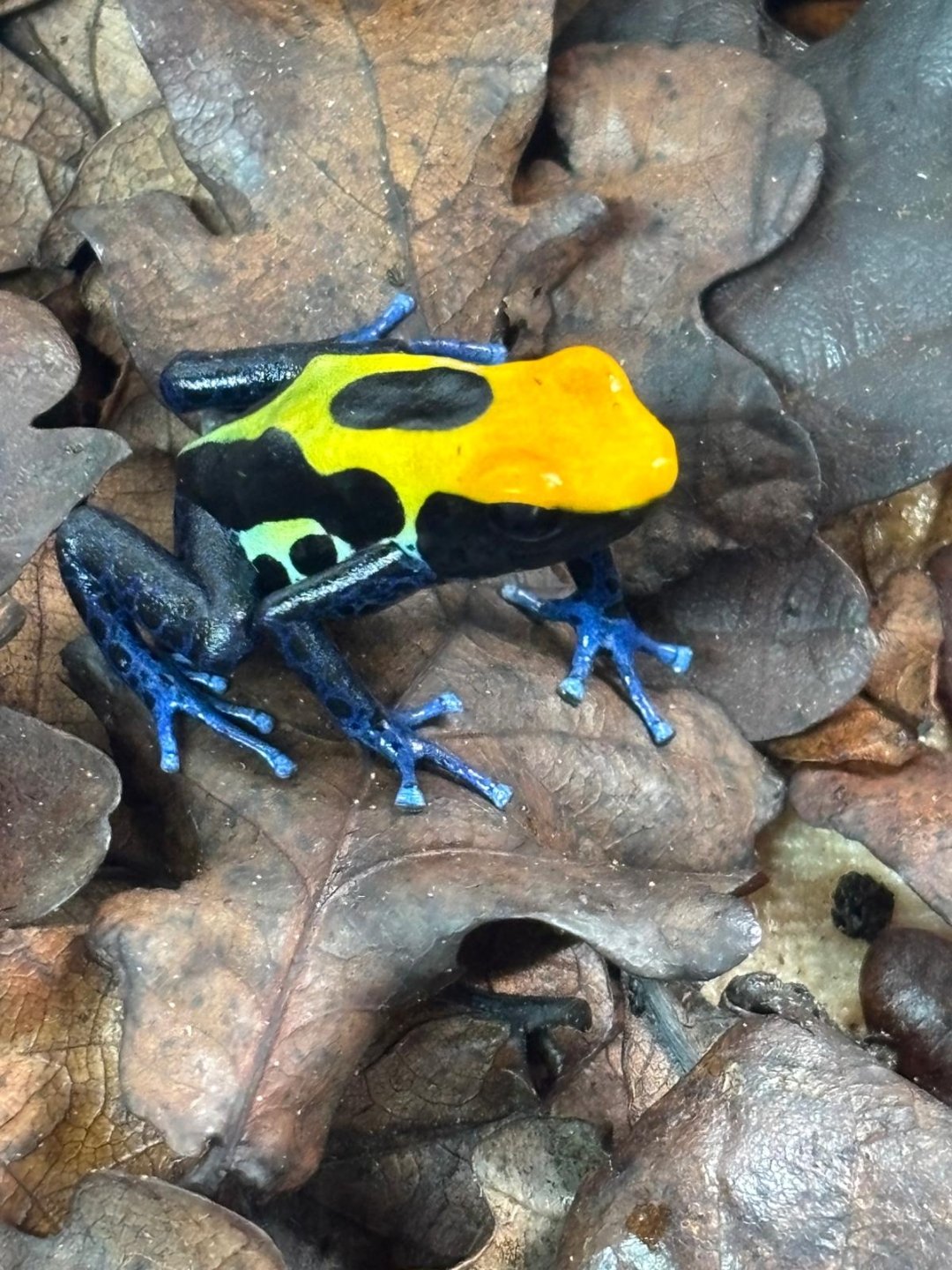
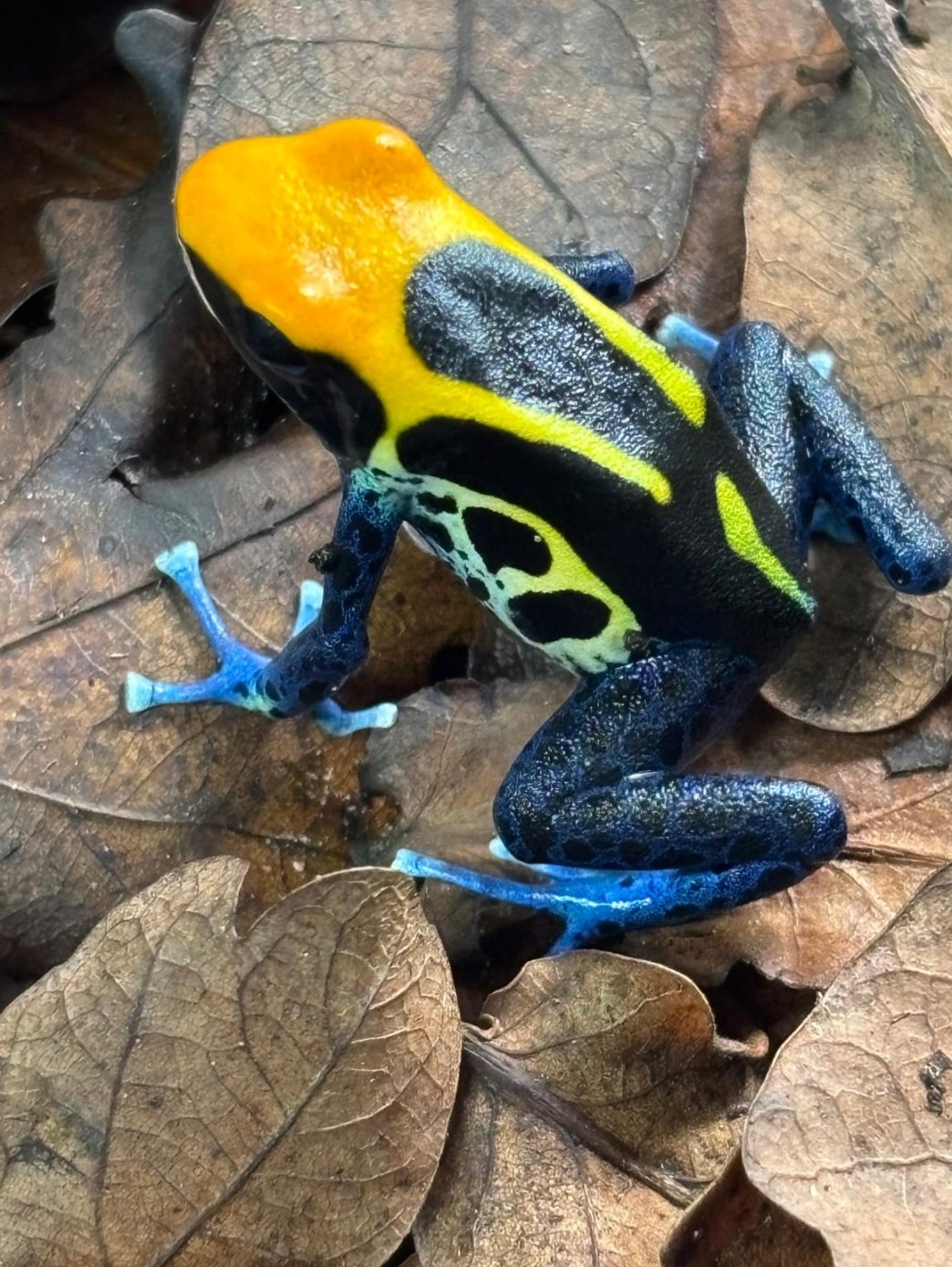
Adult Male Dendrobates tinctorius ‘Brazil’
Captive-bred adult male Dendrobates tinctorius ‘Brazil’, sexed through repeated observed calling alongside adult characteristics.
‘Brazil’ is the established line/form designation under which these animals are maintained. It should be kept distinct from the scientific name: the species is Dendrobates tinctorius.
🐸 Species & Line Information
- Scientific name: Dendrobates tinctorius
- Line / form: ‘Brazil’
- Family: Dendrobatidae
- Sex: Male
- Sexing basis: Repeated observed adult calling alongside adult characteristics
- Breeding origin: Captive bred
Taxonomy note: Dendrobates tinctorius is the scientific species name. ‘Brazil’ is the established designation used for this particular captive line/form and should not be interpreted as a separate species or subspecies.
Where established D. tinctorius lines are maintained, we recommend keeping accurate provenance records and avoiding intentional crosses between different named lines.
♂️ Sexing
These animals are offered as males on the basis of repeated observed calling together with their adult characteristics. Advertisement and courtship calling provide strong practical evidence of male sex in mature Dendrobates tinctorius.
We prefer to explain the evidence used to sex an animal rather than using absolute phrases such as “100% guaranteed sexed”.
🧬 Pairing & Breeding
An established adult male may be suitable for a keeper looking to create an appropriate pairing with a compatible female of the same established line.
Sexing an animal does not guarantee compatibility, courtship, fertility or successful breeding. Introductions should be monitored carefully, with the ability to separate animals if persistent aggression or other compatibility problems occur.
We do not recommend intentionally pairing different named Dendrobates tinctorius lines. Maintaining identifiable lines separately helps preserve useful provenance information for future keepers and breeders.
🏡 Social Housing
Dendrobates tinctorius can display significant territorial and aggressive behaviour, including aggression between males. For this reason, same-sex “bachelor groups” are not presented as a default housing recommendation.
Social compatibility should be assessed on the animals actually being kept. Provide sufficient usable space, visual barriers, retreats and feeding opportunities, monitor behaviour closely, and retain the ability to separate animals when necessary.
🌿 Environment & Husbandry
Provide a mature, well-designed vivarium with substantial usable floor area, leaf litter, planting, visual barriers and suitable retreats. The enclosure should retain appropriate moisture while also providing effective ventilation and access to differing microhabitats.
Feed appropriately sized live prey as part of a consistent feeding and supplementation programme. Fruit flies are commonly used as a staple feeder, alongside appropriate supplementation and additional suitable live foods where required.
Temperature, moisture and ventilation should be considered together rather than attempting to maintain one fixed humidity percentage. Avoid prolonged overheating, stagnant saturated conditions and rapid environmental swings.
👤 Suitable For
- Keepers looking for an established male Dendrobates tinctorius ‘Brazil’
- Appropriate same-line pairing projects
- Experienced dart frog keepers maintaining established D. tinctorius lines
- Keepers able to monitor social compatibility and separate animals if necessary
🐸 Live Animal Disclaimer
This product is a live amphibian and is available for UK legal purchase only.
Live-animal courier delivery is temporarily paused. Please check the current Live Animal Policy / FAQ before ordering for the latest collection and future delivery options.
By purchasing, you confirm that you are aged 18 or over and that keeping this species is legal in your location.
Learn more in our Live Animal Policy.
Live-Animal Husbandry Review
Last reviewed: September 2026
Temperature, moisture, enclosure design, social compatibility and supplementation should be matched to the species, life stage and individual animals. Frogfather therefore avoids treating a single relative-humidity percentage, fixed enclosure size or pair/group formula as a universal rule.
Where additional heat is required, it should be appropriately controlled and monitored. Avoid prolonged overheating, stagnant saturated conditions and rapid environmental swings.
Frogfather’s own husbandry practices represent practical methods used with our animals rather than the only acceptable way of maintaining the species.
Evidence & Further Reading
- Amphibian Species of the World – Dendrobates tinctorius
- Rojas & Pašukonis – aggressive behaviour in Dendrobates tinctorius
- St Claire et al. – The husbandry and care of dendrobatid frogs