
Raising dart frog froglets is one of the most rewarding parts of keeping and breeding — but it’s also where a lot of subtle mistakes happen.
Froglets aren’t just “small adults”. They have different hydration sensitivity, different feeding behaviour, different stress responses, and different vulnerability to imbalance.
This guide walks you through how to set up and run a proper grow-out tub — based on real-world breeding experience — so your froglets don’t just survive, but thrive.
When Should You Move Froglets to a Grow-Out Tub?
Once the froglet has fully absorbed its tail and is actively hopping and hunting, it’s ready to move.
That usually means:
- Fully resorbed tail
- Strong coordinated movement
- Responding to movement (feeding response)
Don’t rush. Weak or newly morphed froglets benefit from an extra 24–48 hours in a safe transition container.
Why Use a Grow-Out Tub Instead of a Full Vivarium?
Grow-out tubs offer:
- Controlled feeding observation
- Simpler humidity management
- Easier monitoring of droppings
- Reduced competition
- Lower stress
They are temporary conditioning environments — not permanent homes.
Ideal Grow-Out Tub Size
For individual froglets or small groups:
- 5–10 litre clear ventilated tub works well
- Shallow rather than tall
- Good visibility for monitoring
Overcrowding slows growth and increases stress. When in doubt, fewer per tub is better.
Ventilation: The Most Overlooked Factor
High humidity does not mean sealed plastic box.
Grow-out tubs must have:
- Cross ventilation holes
- Air exchange at least weekly
- No stagnant condensation pooling
Stagnant air increases mould risk and can suppress appetite.
Substrate Setup (Keep It Simple)
You don’t need a full bioactive build in a grow-out tub.
A simple setup works best:
- Damp paper towel base (changed regularly)
- Small patch of leaf litter
- A bit of moss for cover
- Small cork bark hide
The goal is hygiene and observation — not aesthetics.
Humidity & Temperature
Humidity: 80–95% with airflow.
Temperature: 21–24°C stable.
Froglets dehydrate faster than adults. But constant soaking conditions encourage mould.
Light misting once or twice daily is usually sufficient.
Feeding Froglets Properly
Feeding frequency matters more than volume.
Feed Daily
- Small melanogaster fruit flies
- Freshly hatched microfauna if available
Small Amounts
Overloading the tub leads to:
- Supplement dust loss
- Fruit fly escape stress
- Mould build-up
Controlled, visible feeding ensures intake.
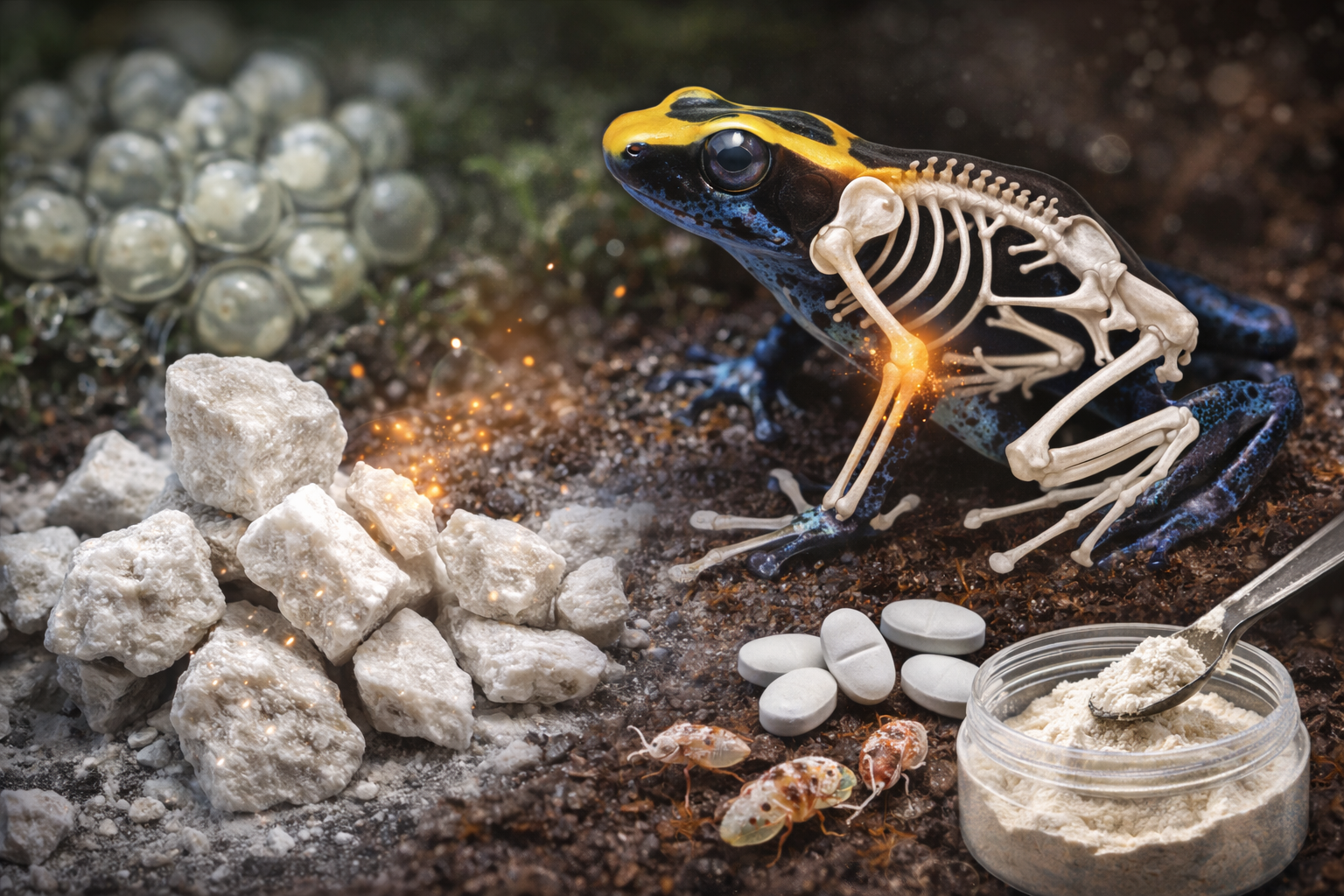
Supplement Strategy for Froglets
Young frogs are building bone density rapidly.
Calcium consistency is critical.
I recommend a steady dusting routine using a balanced product such as:
All-in-1 Vitamin & Mineral Dust
Light dusting daily or every second feed works well in grow-out stages.
How to Tell If a Froglet Is Thriving
- Actively hunting within minutes of food introduction
- Bright skin tone
- Regular droppings
- Steady weight gain
- No spine prominence
Red flags include lethargy, refusal to hunt, thin hips, or excessive hiding.
Common Grow-Out Mistakes
1. Too Wet
Pooling water = mould and bacterial risk.
2. Too Many Per Tub
Competition reduces growth rate.
3. Inconsistent Supplementation
Bone development is unforgiving during early stages.
4. Leaving Them Too Long
Grow-out tubs are transitional. Move them once robust.
When to Move to a Juvenile Vivarium
Usually when:
- They are feeding confidently
- They have doubled in size
- They show strong muscle tone
- They are no longer delicate to minor humidity fluctuations
Transition gradually. Monitor closely in the first week.
FAQ
How long should froglets stay in a grow-out tub?
Typically 4–8 weeks depending on growth rate and species.
Can I keep different species together?
No. Species and morph mixing should be avoided for biosecurity and genetic integrity.
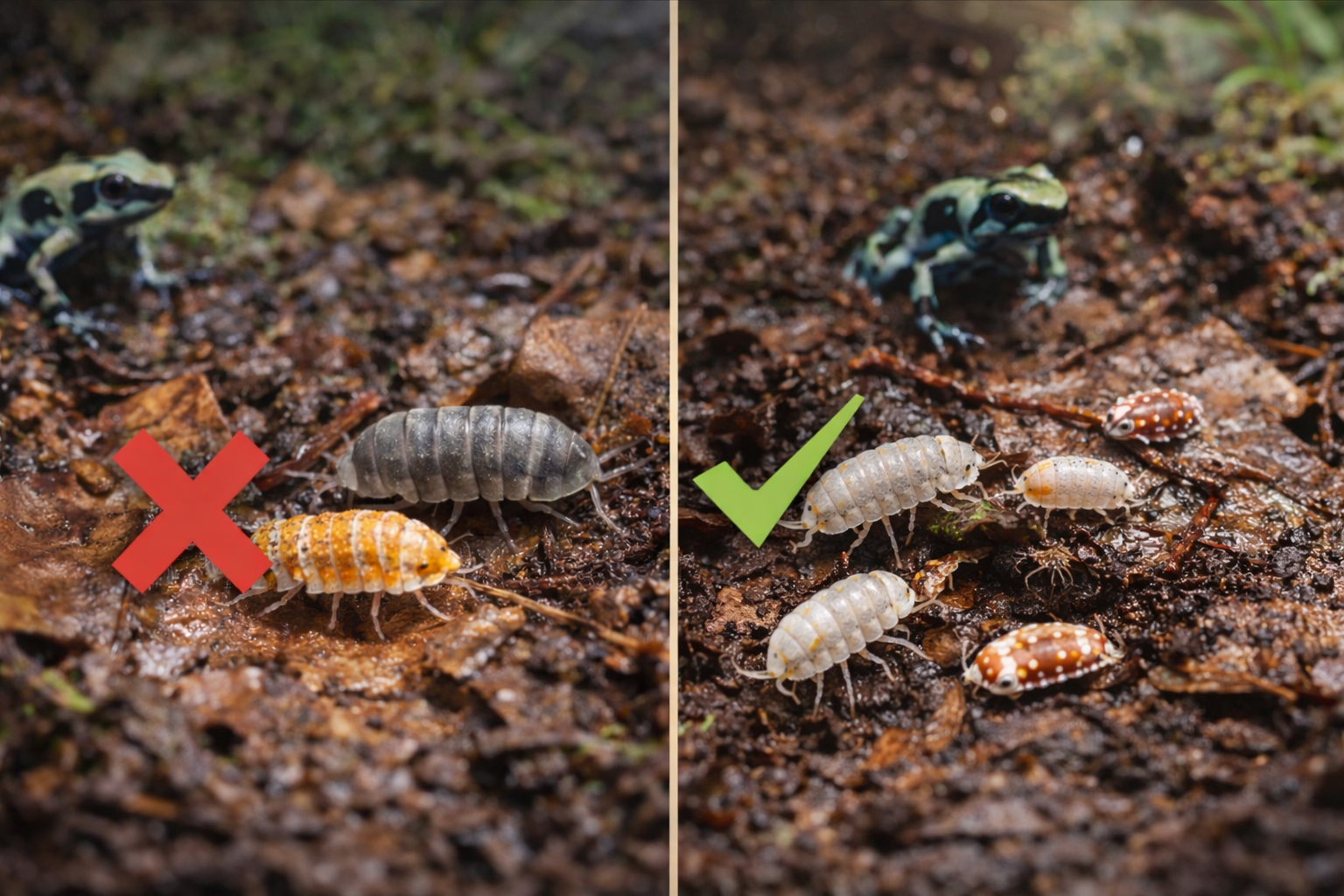
Do I need isopods in a grow-out tub?
Not essential, but springtails can help buffer mould in damp setups.
How often should I clean the tub?
Spot clean daily. Full substrate refresh as needed if using paper towel base.
Final Thoughts
Raising froglets isn’t complicated — but it is precise.
Consistency, ventilation, controlled feeding, and proper supplementation are the pillars.
Get those right, and you’ll produce strong, healthy juveniles ready for long-term success.