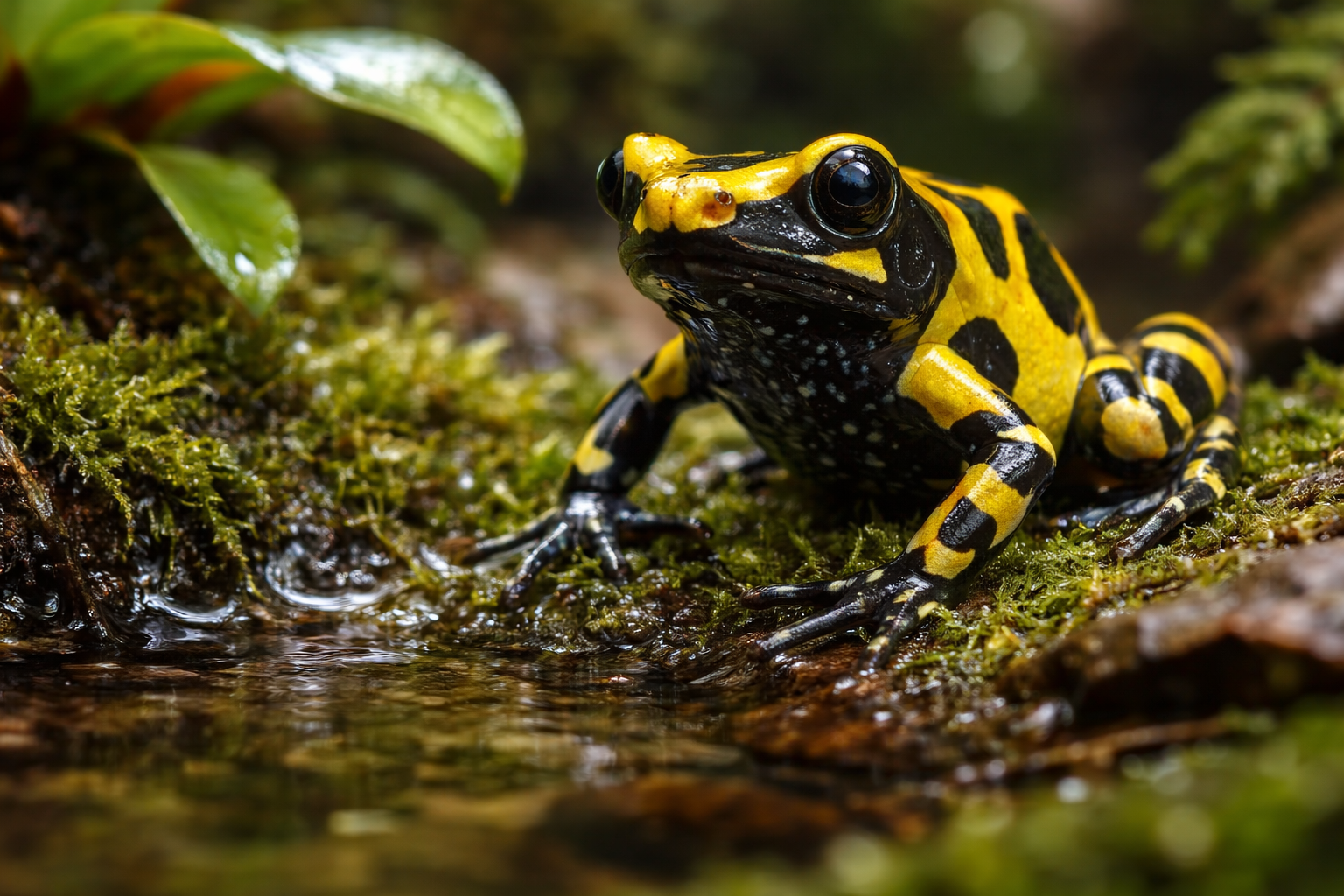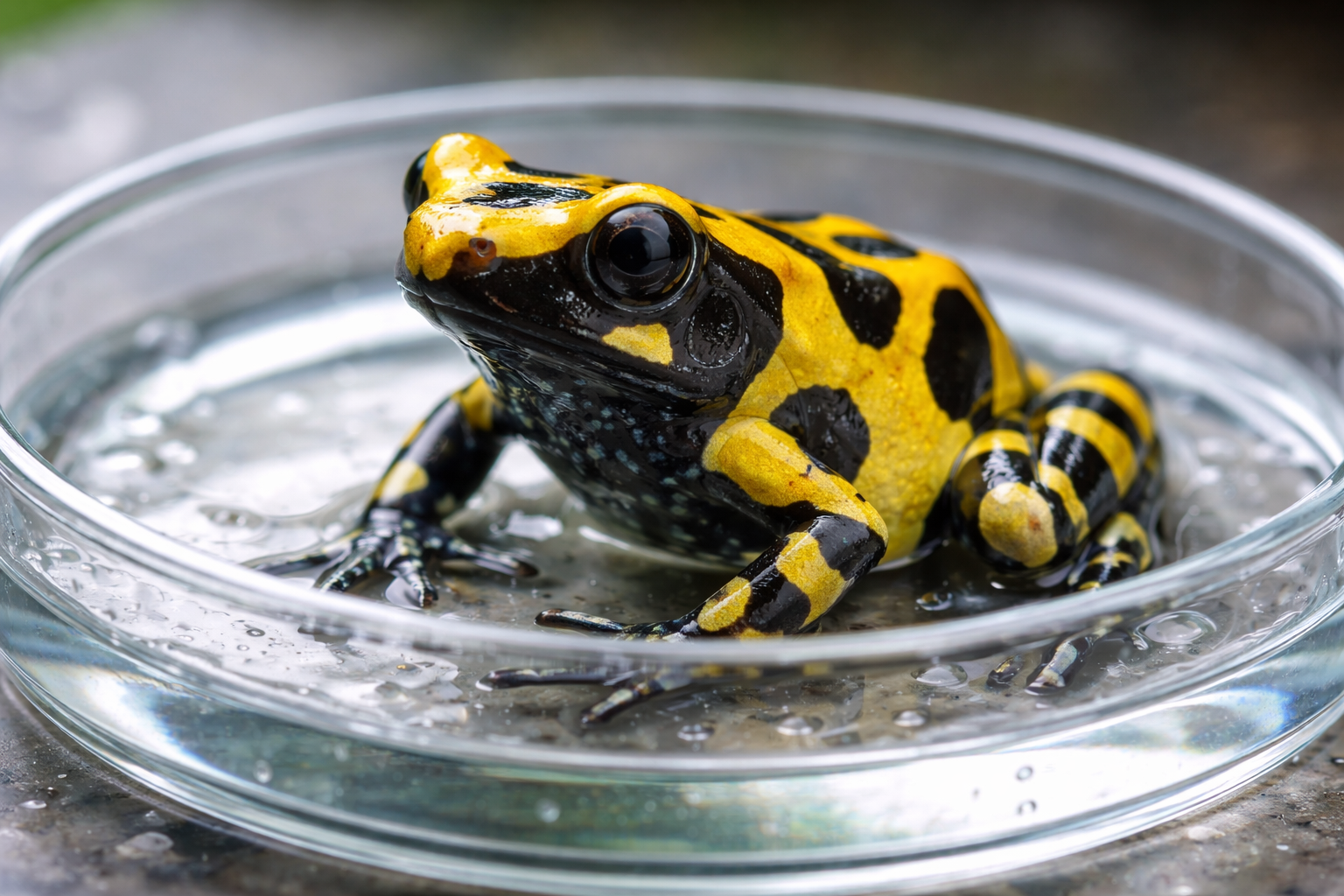

Anyone who keeps poison dart frogs for long enough will eventually notice something interesting: when one frog starts calling, others often follow. In breeding rooms across the UK and Europe, keepers have long suspected that the sound of other frogs plays an important role in stimulating mating behaviour.
Now, a newly published scientific study suggests that this observation might have a real biological basis. Researchers have discovered that hearing frog calls can influence hormone activity and reproductive gene expression, ultimately increasing fertility.
For dart frog breeders, this opens up a fascinating possibility: could carefully timed playback of frog calls help stimulate breeding behaviour in captivity?
In this article we’ll look at what the science says, how it might apply to dart frogs, and how breeders could experiment responsibly with sound, humidity and temperature to encourage breeding.
The Scientific Study: Frog Calls Affect Fertility
In March 2026, researchers published a study in the journal Scientific Reports examining how male frogs respond to acoustic cues from other frogs.
The study focused on the boreal chorus frog (Pseudacris maculata). Researchers played recordings of frog calls to males and observed how this affected behaviour and reproductive biology.
The results were striking:
- Males exposed to frog calls spent significantly more time calling.
- The sound triggered changes in gene expression in the testes.
- Breeding trials showed an increase in viable eggs produced.
In other words, hearing the calls of other frogs didn’t just change behaviour — it actually influenced reproductive physiology.
The full study can be read here:
Credit: Scientific Reports, Nature Publishing Group (2026).
Why Frog Calls Trigger Breeding Behaviour
In the wild, frogs rarely breed in isolation. Most species gather in large groups known as choruses, where males compete to attract females.
The sound of other males calling acts as an environmental signal that:
- Breeding conditions are favourable
- Other frogs are present
- Competition for mates has begun
When frogs hear these signals, their brains activate hormonal pathways linked to reproduction. Scientists refer to this system as the hypothalamic–pituitary–gonadal axis, which regulates fertility in many vertebrates.
Essentially, the sound of a frog chorus can act as a biological switch that says:
“It’s time to breed.”
Does This Apply to Dart Frogs?
The study was conducted on chorus frogs rather than poison dart frogs, but the underlying biology is shared across many amphibian species.
Dart frogs also rely heavily on sound during reproduction. Male dart frogs call to:
- Attract females
- Defend territories
- Signal breeding readiness
Many experienced keepers have already noticed that when one frog starts calling, others often join in. In breeding groups, this can lead to increased courtship behaviour and egg laying.
This means that acoustic stimulation may be a useful tool for breeders, especially when combined with other environmental triggers.
Environmental Triggers That Encourage Dart Frog Breeding
In nature, dart frogs typically breed during the rainy season. Successful captive breeding usually requires recreating similar environmental cues.
The most important triggers include:
1. Increased Humidity
Rainfall signals the start of the breeding season in tropical forests. Many breeders increase misting frequency to simulate this.
Typical approach:
- Increase misting for 1–2 weeks
- Allow humidity to reach 90–100%
- Provide fresh leaf litter and water collection points
2. Slight Temperature Increase
A small temperature rise can mimic seasonal changes.
- Typical dart frog range: 22–25°C
- Breeding trigger: slight increase toward the upper end
3. Increased Feeding
In the wild, breeding often follows periods of abundant food.
- Increase fruit fly feeding frequency
- Ensure proper supplementation
- Offer springtails and microfauna
4. Acoustic Stimulation
This is where the new research becomes particularly interesting.
Playing recordings of frog calls may simulate the presence of a chorus and encourage males to begin calling.
How Breeders Could Experiment with Frog Call Playback
If you want to test this method, it should be done gently and responsibly.
Here is a simple approach:
Step 1 – Use Species-Appropriate Calls
If possible, play recordings of the same species you keep. For example:
- Dendrobates tinctorius
- Ameerega species
- Oophaga species
Step 2 – Keep Volume Natural
Frogs have sensitive hearing. Playback should be quiet and natural, similar to what you would hear in a rainforest.
Step 3 – Short Playback Sessions
Try playing recordings for short periods:
- 10–20 minutes in the morning
- 10–20 minutes in the evening
Step 4 – Combine with Environmental Triggers
Playback alone is unlikely to trigger breeding. The best results will probably come from combining:
- High humidity
- Seasonal temperature cues
- Increased feeding
- Suitable egg-laying sites
Why This Matters for Dart Frog Breeders
Captive breeding of dart frogs is extremely important for the hobby.
Healthy captive populations help reduce demand for wild-caught animals and ensure that many species remain available to enthusiasts.
If acoustic stimulation can improve breeding success, even slightly, it could become a useful technique for:
- Encouraging reluctant males to call
- Synchronising breeding groups
- Improving reproductive success
However, this area still needs more research — especially on poison dart frogs themselves.
A Note from Frogfather
As keepers and breeders, we often discover small behavioural tricks through observation long before science confirms them.
Many dart frog keepers have noticed that frog rooms become noticeably louder when several species start calling at once. It’s entirely possible that those sounds are influencing behaviour in nearby frogs.
This new research gives scientific support to something breeders have suspected for years: frogs respond strongly to the sounds of other frogs.
While more studies are needed specifically on dart frogs, experimenting with natural environmental cues — including sound — may be another useful tool in the breeder’s toolkit.
Further Reading
Credit to the original research:
Reception of conspecific cues alters testicular gene expression and improves fertility in frogs – Scientific Reports (Nature Publishing Group, 2026)
Article Author
Frequently Asked Questions
Can playing frog calls really make dart frogs breed?
Recent scientific research suggests that hearing frog calls can trigger reproductive responses in frogs. While the study was conducted on chorus frogs rather than poison dart frogs, the biological mechanisms involved are common across many amphibian species. Some dart frog breeders report increased calling behaviour when frogs hear other frogs calling.
What sounds should I play for dart frogs?
The best option is recordings of the same species you keep. Dart frogs respond most strongly to the calls of their own species. If those recordings are not available, similar species calls may still encourage calling behaviour.
How loud should frog call playback be?
The playback should be quiet and natural, similar to what you would hear from frogs in the same room. Frogs have sensitive hearing and loud artificial playback may stress them.
How long should frog calls be played?
Short sessions are usually sufficient. Many keepers experiment with playing frog calls for 10–20 minutes once or twice per day, particularly during periods of increased humidity and feeding.
What environmental changes encourage dart frog breeding?
Dart frogs typically breed during rainy seasons in the wild. Increasing humidity, slightly raising temperatures, increasing feeding frequency and providing suitable egg laying sites are all commonly used techniques to encourage breeding.
Is there scientific evidence that frog calls affect fertility?
Yes. A 2026 study published in Scientific Reports showed that hearing frog calls altered reproductive gene expression and increased fertility in chorus frogs. The findings suggest acoustic cues play an important role in amphibian reproduction.