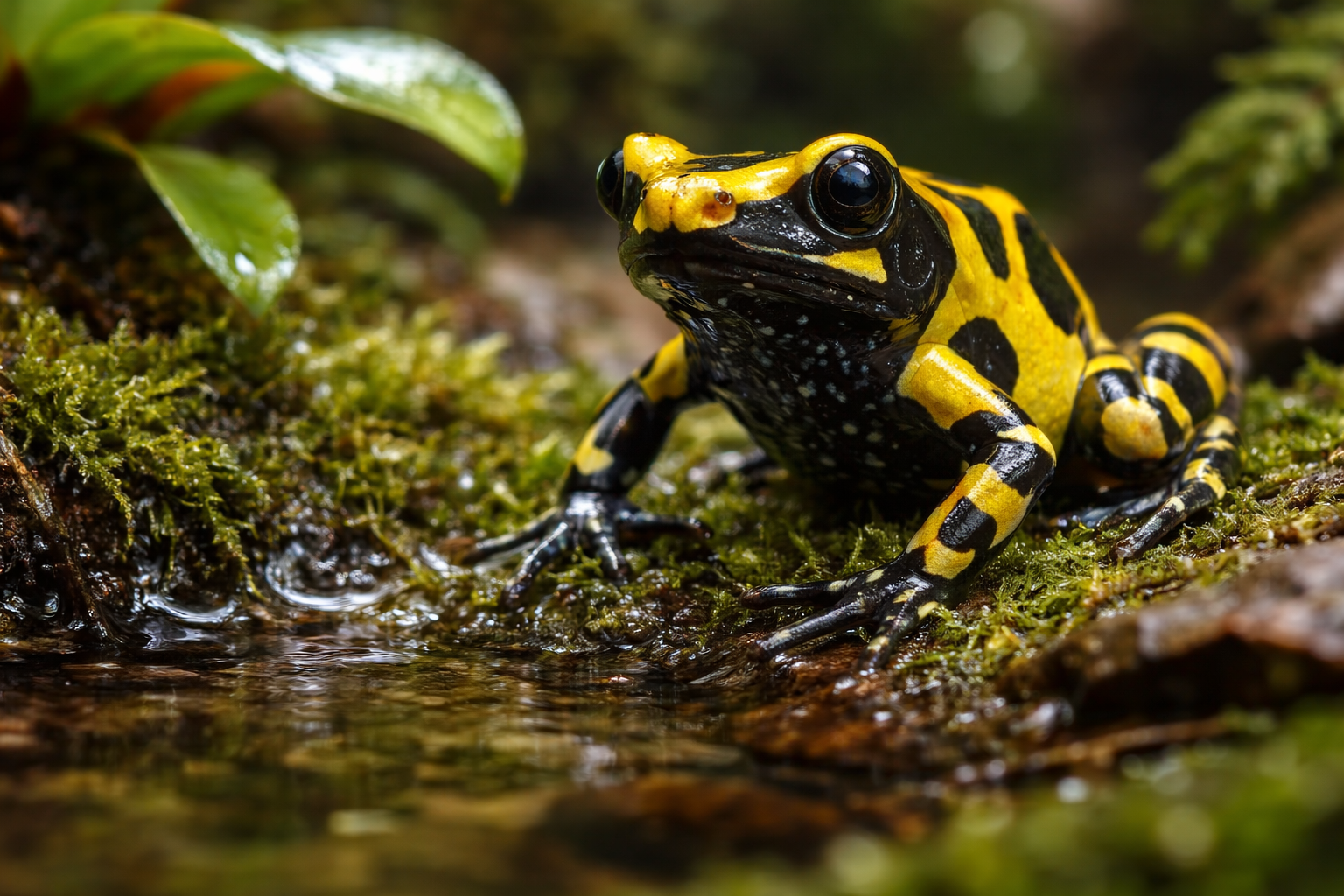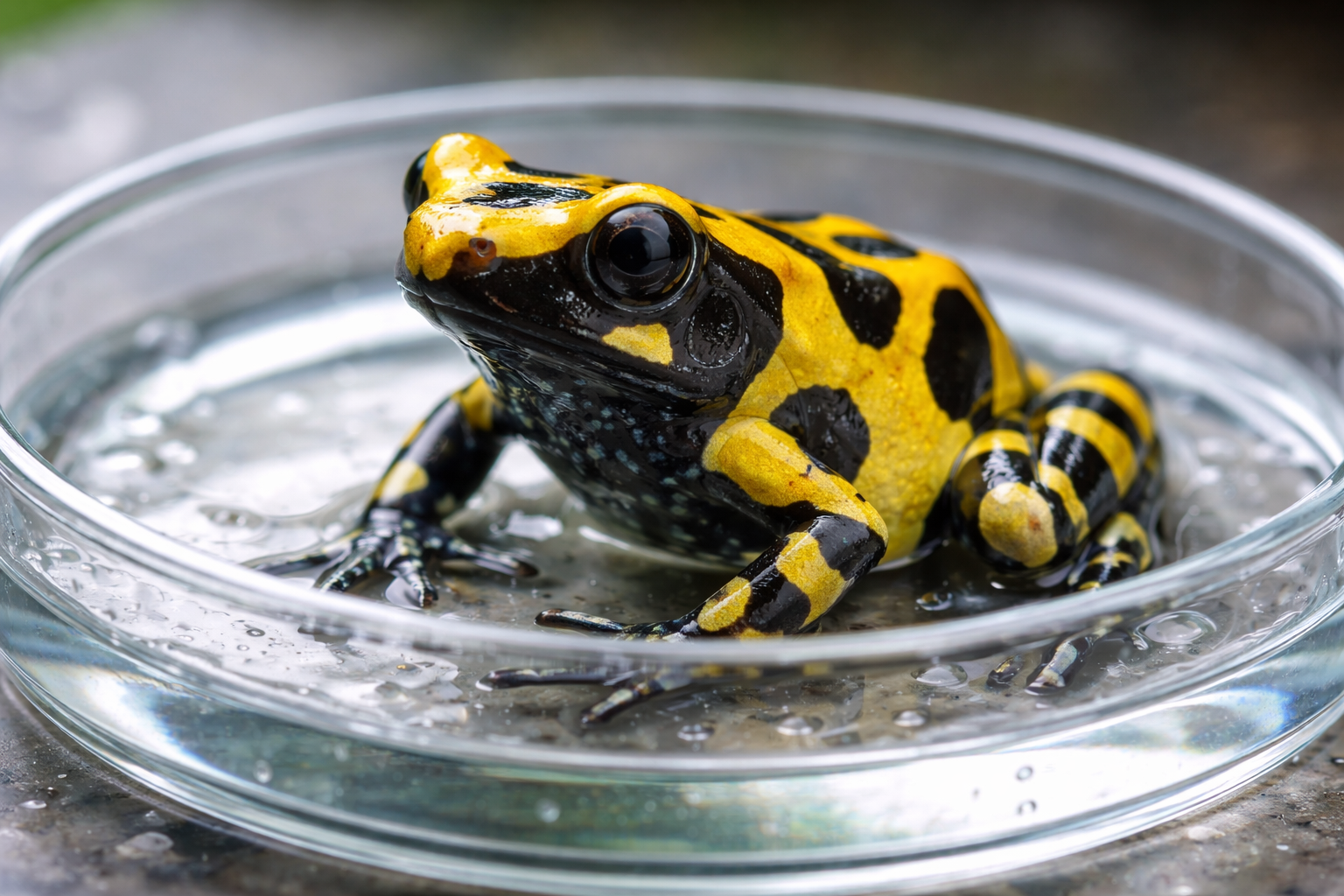

If you’ve searched for arrow frogs recently, chances are you’ve noticed something odd: the term is everywhere, yet rarely explained properly. Sometimes it’s used interchangeably with poison dart frogs, sometimes it isn’t — and depending on where you look, the advice can feel inconsistent or even contradictory.
This confusion isn’t accidental. “Arrow frog” is an older, informal name, while “poison dart frog” is the modern scientific and hobby standard. Understanding how the two terms connect — and why they still matter today — is essential for anyone interested in keeping, learning about, or working with these remarkable animals.
In this guide, we’ll untangle the history behind arrow frogs and poison dart frogs, explain what the names actually mean, and look at how this history still shapes modern care in captivity.
If you’re new to the hobby, or looking to deepen your understanding, this is the foundation everything else builds on.
Related: View our dart frog resources and care-focused listings
What are arrow frogs?
The term arrow frog predates modern herpetology and captive keeping. It comes from indigenous practices in parts of Central and South America, where certain frog species were used to poison the tips of blow darts or arrows for hunting.
These frogs were never “arrow frogs” in a biological sense — they were wild amphibians whose skin secretions contained potent alkaloid toxins. The poison came from their diet, not from the frogs themselves.
Over time, Western explorers and early naturalists popularised the term “arrow frog” in travel writing and museum collections. It stuck — even as science moved on.
Today, “arrow frog” remains a popular search term, especially among people encountering these frogs for the first time.
So what are poison dart frogs?
Poison dart frogs is the modern umbrella term used to describe frogs in the family Dendrobatidae. This group includes well-known genera such as:
- Dendrobates
- Ranitomeya
- Ameerega
- Oophaga
In the wild, some of these species produce powerful toxins — again, entirely dependent on diet. In captivity, however, poison dart frogs (including those often called arrow frogs) are non-toxic.
The name “poison dart frog” stuck because it is more precise, more scientific, and more widely accepted in conservation, research, and the hobby.
Why the names still matter today
From an SEO point of view, “arrow frogs” and “poison dart frogs” are effectively the same topic — but from an education point of view, understanding the difference helps clear up several persistent myths.
Common misconceptions include:
- that captive arrow frogs are poisonous (they are not)
- that all poison dart frogs were historically used on arrows (they were not)
- that toxicity is a fixed trait rather than diet-driven
Clearing this up is important, not just for accuracy, but for responsible care and realistic expectations.
Arrow frogs in the wild vs captivity
In the wild, poison dart frogs live in highly specific microhabitats. Many species occupy extremely small geographic ranges, sometimes limited to a single valley, hillside, or forest fragment.
They rely on:
- high humidity
- stable temperatures
- constant access to tiny invertebrates
- leaf litter, moss, and water-filled plant structures
In captivity, these same needs must be replicated carefully — not approximated.
This is why modern dart frog care focuses so heavily on bioactive setups, microfauna, and supplementation, rather than simple enclosures.
Explore: dart frog care essentials and guidance
Why diet defines toxicity (and health)
One of the most fascinating things about arrow frogs is that their famous toxins don’t come from the frogs themselves. They come from the insects they eat — particularly ants and mites rich in alkaloids.
In captivity, these insects are absent. As a result:
- captive poison dart frogs are non-toxic
- diet must be carefully supplemented
- nutrition directly affects colour, growth, and breeding success
This is why feeding and supplementation are not optional extras, but core parts of responsible arrow frog care.
Next reading: Microfauna, foods, and supplements for dart frogs
Why arrow frogs are not “beginner frogs” — but can be beginner-kept
Arrow frogs are often described as difficult, but that’s not entirely fair. They are precise, not fragile.
When their needs are met consistently, poison dart frogs are:
- active during the day
- long-lived
- behaviourally fascinating
Problems arise when care is simplified too far — particularly around nutrition and habitat structure.
Many long-term issues trace back to:
- insufficient microfauna diversity
- inconsistent supplementation
- overly sterile environments
These are all solvable problems — and ones we’ll cover in detail across the rest of this series.
Why this matters for modern dart frog keeping
Understanding the arrow frog vs poison dart frog distinction isn’t about semantics. It’s about context.
These frogs evolved in complex ecosystems, where nutrition, habitat, and behaviour are tightly linked. Modern care works best when we respect that complexity rather than trying to strip it away.
This is also why education-driven care produces healthier frogs than shortcut-based approaches.
Continue the series:
- What Do Arrow Frogs Eat? A Complete Feeding Guide
- Do Poison Dart Frogs Need Supplements?
- Why Moss and Microhabitats Matter for Arrow Frogs
Key takeaway: Arrow frogs and poison dart frogs refer to the same remarkable group of animals — but understanding where the names come from helps us care for them properly, responsibly, and long-term.