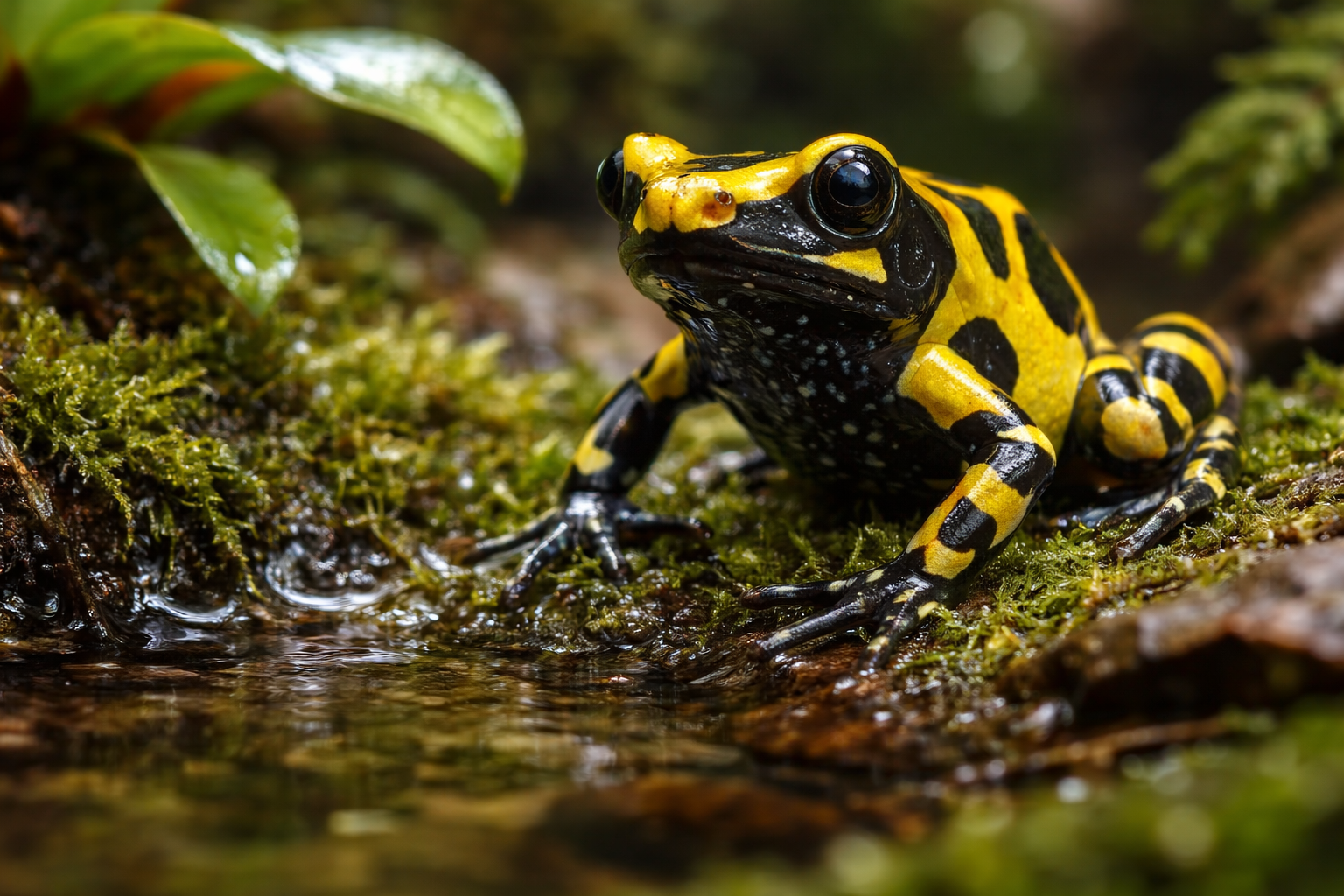

Amazon milk frogs are large, striking tree frogs with blue-grey and brown banding and pale blue toes. They’re impressive display animals that do well in tall, planted vivaria, but they need more space and ventilation than many tree frogs due to their size and messy habits.
Quick Facts
- Common name: Amazon milk frog, blue milk frog
- Scientific name: Trachycephalus resinifictrix
- Adult size: 7–11 cm
- Lifespan: 8–12+ years
- Difficulty: Intermediate
- Activity: Nocturnal, very visible at night
Natural History
Amazon milk frogs are native to the Amazon basin, living high above the ground in tree cavities and on branches over water. When stressed, they secrete a milky substance from their skin, which gives them their common name.
Enclosure & Setup
- Minimum size: At least 45 × 45 × 60 cm for a pair, larger (e.g. 60 × 45 × 90 cm) recommended for groups.
- Substrate: Bioactive or moist soil with drainage layer.
- Décor: Thick branches, cork tubes and large, sturdy plants that can support their weight, plus a large water bowl.
They are strong, heavy frogs, so ensure all branches and décor are stable and securely fixed.
Temperature & Humidity
- Day temperature: 24–28 °C.
- Night temperature: 22–24 °C.
- Humidity: 60–80%, with good airflow to prevent stagnation.
Lighting
Provide a UVB tube covering part of the enclosure along with bright LEDs or T5 lighting for plant growth. Ensure some perches are within the correct UV index and others are shaded, so frogs can choose their exposure.
Water & Hydration
- Use a large, accessible water bowl with dechlorinated water.
- Change water daily. Milk frogs produce a lot of waste.
- Mist lightly in the evening; heavy misting is not usually necessary with a big water bowl and live plants.
Diet & Feeding
- Main foods: Crickets, roaches, locusts, earthworms.
- Feeding frequency: Juveniles every 1–2 days; adults 2–3 times per week.
- Supplements: Calcium and multivitamin dusting according to age and UVB level.
Feed in the evening when the frogs are active. Monitor for obesity — large tree frogs can gain weight quickly.
Behaviour & Handling
Amazon milk frogs are robust but should not be handled frequently:
- They can secrete a sticky, milky toxin when stressed, which may irritate skin and eyes.
- Limit handling to enclosure maintenance and health checks.
- Use clean, wet hands or gloves, and rinse thoroughly afterwards.
Common Health Issues
- Skin problems: Often linked to poor ventilation or dirty conditions.
- Obesity: From overfeeding and limited space.
- Foot abrasions: If kept on rough or abrasive décor surfaces.
Is an Amazon Milk Frog Right for You?
Choose Amazon milk frogs if you want a large, impressive arboreal species and you’re prepared to invest in a big, well-ventilated vivarium with strong branches and good filtration of waste. They’re ideal for experienced keepers stepping up from smaller tree frogs.