
Husbandry & Evidence Review – 5 September 2026
This is an isopod-culture method, not an amphibian decontamination protocol. Wild moss/lichen can carry biological and chemical hazards that rinsing, salt and quarantine cannot completely eliminate.
UK mosses and lichens look absolutely unreal in an isopod setup. They add texture, colour, and that “proper woodland” vibe you can’t fake with plastic decor. The problem? Wild moss can be a stowaway delivery service for slugs, snails, mites, fly larvae, eggs, and all sorts of tiny hitchhikers you really don’t want anywhere near your cultures.
This is the method I use to safely bring moss (and sometimes lichen) into my isopod colonies. It’s not the fastest way, but it’s the way that keeps your tubs clean and your sanity intact.
Quick Warning Before You Start
- Don’t take moss or lichen from protected sites (SSSI, nature reserves, parks with signage, private land without permission). If in doubt, don’t collect.
- Collect small amounts. You’re not stripping a habitat—just taking a little for a micro-ecosystem at home.
- Avoid roadside moss. Roads bring salt, oil residues, brake dust, heavy metals, and pollutants.
- Lichen is slow-growing and can be more sensitive than moss. If you can’t keep it alive long-term, consider leaving it in the wild and using moss instead.
Why Decontamination Matters (Even If It “Looks Clean”)
Moss is basically a tiny sponge. It holds moisture, particles, and micro-life. That’s why it thrives… and why it can carry:
- Slug/snail eggs (the classic isopod culture nightmare)
- Slugs, tiny snails, and juveniles hidden deep in the mat
- Mite species you didn’t invite
- Fungus gnat larvae and other fly larvae
- Unwanted nematodes or other soil microfauna that can throw a culture off balance
Some hitchhikers are harmless. Some are helpful. But if you’re keeping higher-end species, breeding projects, or multiple tubs, you don’t want to gamble. Clean it properly once, and you’re sorted.

What You’ll Need
- A bucket or washing tub
- Fresh water (tap water is fine for rinsing)
- Salt (plain table salt is fine)
- A prop box / clear plastic tub with a lid
- Paper towel or a clean mesh rack (optional, for draining)
- Gloves (optional, but nice if you’re handling lots)
Step-by-Step: My Safe Moss Cleaning Method
Step 1: Collect from the Right Place
I collect moss from somewhere remote, away from chemical sprays, footpaths, roads, farmland run-off, and obvious pollution. Think woodland edges, shaded banks, old logs, and damp stone in quiet places.
Tip: If the moss is growing in a place that looks “too perfect” (neat lawns, landscaped areas, public gardens), assume it’s been treated at some point.
Step 2: Remove Soil & Give It a Proper Rinse
At home, I wash off any soil and debris from the base. I’m not trying to shred the moss—just rinse it thoroughly. You’ll be surprised how much grit comes out.
- Swish it in water
- Gently rub the base if it’s muddy
- Repeat until the water runs mostly clear
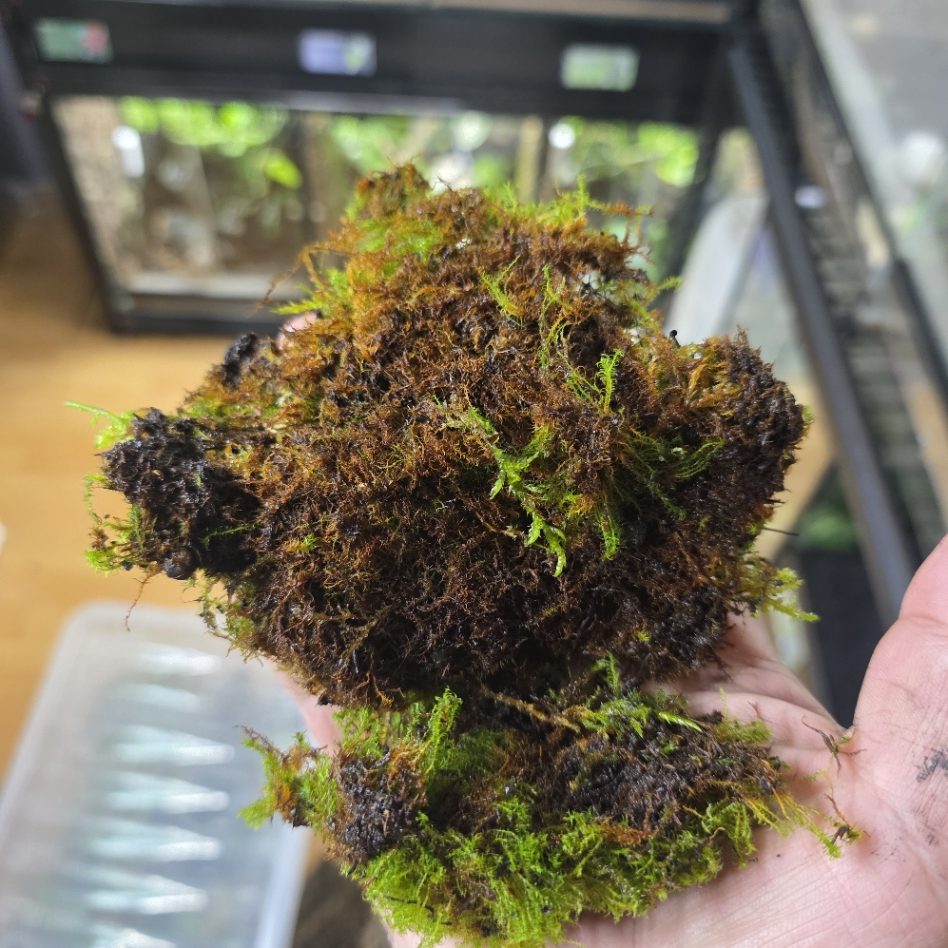
Step 3: Salt Water Immersion (Overnight to 48 Hours)
At Frogfather, a salt soak has been used as a practical attempt to reduce slugs/snails in material destined for some isopod cultures. It is not a validated sterilisation or universal kill-step, may damage moss/lichen and will not reliably remove pesticides, pollutants, pathogens or every egg/hitchhiker.
Suggested mix: Aim for a “noticeably salty” solution rather than a perfect lab number. If you want a simple guide, use:
- 30–35g of salt per litre of water (roughly 2 level tablespoons per litre)
Salt tolerance varies greatly among mosses/lichens. If this method is used for an invertebrate culture, rinse thoroughly and quarantine afterward. Do not describe the result as “safe” or pest-free solely because it survived a salt soak.
Important: Keep it fully submerged. If it floats, weigh it down with something clean (a plate, a plastic grid, or a sealed bag of water).
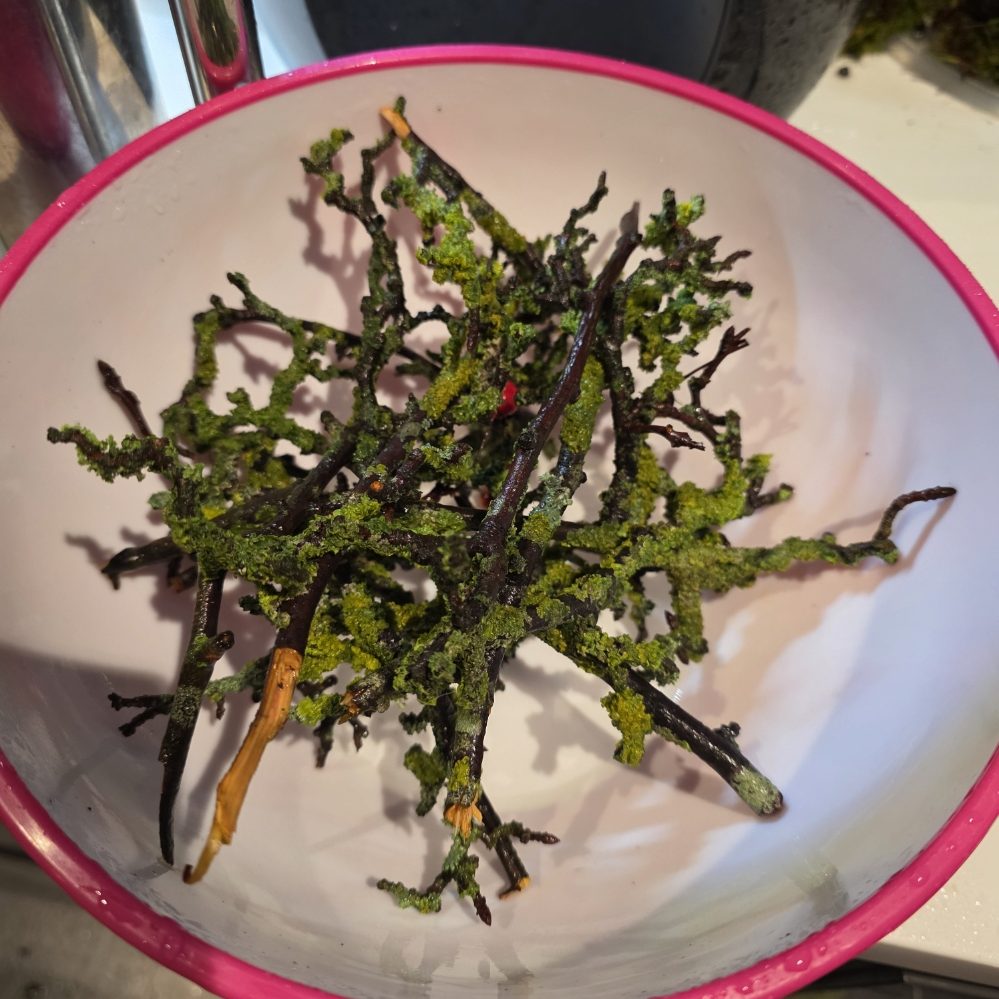
Step 4: Rinse Thoroughly (Properly Thoroughly)
After the soak, rinse it in fresh water multiple times. You want to remove salt residues because salt can mess with your isopods and the microfauna you actually want.
- Rinse
- Squeeze gently
- Rinse again
- Repeat until it no longer feels “slick” or salty
I also give the base another quick clean at this stage because that’s where a lot of eggs and debris sit.
Step 5: Squeeze Out Excess & Move to Quarantine (Prop Box)
Once rinsed, I squeeze out excess water so it’s damp but not dripping. Then it goes into a sealed prop box with high humidity.
How I set up the prop box:
- Clean tub with a lid
- Moss laid flat
- High humidity (it should stay moist without pooling)
- Bright indirect light if you want it to stay green
Why quarantine? Observation gives late-emerging hitchhikers a chance to become visible before the material reaches valuable cultures. There is no evidence that the preceding salt soak removes 99% of hitchhikers.

Step 6: Leave It Alone for Up to 4 Weeks
I leave it for up to four weeks. During that time, check it occasionally:
- Look for tiny snails or slugs
- Look for clusters of eggs
- Watch for fungus gnat activity
- Remove anything suspicious immediately
If the tub fogs up heavily, crack the lid slightly for a bit—moss likes humidity, but stagnant air can encourage mould.
Step 7: Final Rinse & Add to Isopod Setups
After the quarantine period, I give it one more thorough rinse, a gentle squeeze, and then it’s ready to go in with isopods.
This is the bit that makes the method “safe”: anything that survived the salt soak and then hatched during quarantine is either spotted and removed, or gets washed away in the final rinse.
Extra Tips (Worth Doing)
- Keep wild moss separate from your “clean” supplies until it completes quarantine.
- Label the prop box with the date you started quarantine. It’s easy to lose track.
- If you run multiple cultures, treat moss like you treat new isopods: quarantine first, always.
- If your moss browns slightly, don’t panic. Many mosses recover with humidity + light once settled.
Common Mistakes
- Collecting from roadsides: pollutants are the silent killer, not just pests.
- Not rinsing enough after salt: leftover salt can stress isopods and crash microfauna.
- Skipping quarantine: this is where most people get caught out.
- Pooling water in the prop box: can encourage mould and rot.
FAQs
Will the salt soak kill all pests and eggs?
It’s very effective for slugs, snails, and their eggs, plus a lot of other hitchhikers. But the reason I still quarantine for up to four weeks is because nature is weird, and “almost impossible” isn’t the same as “never”. The quarantine + final rinse is what closes the loop.
How salty should the salt water be?
I use roughly 30–35g per litre (about 2 level tablespoons per litre). You want a properly salty solution, not just a pinch. Then rinse thoroughly afterwards.
Can I use this method for lichen too?
You can, but lichen is more sensitive and slow-growing, and it may not love prolonged soaking. If you’re using lichen mainly for aesthetics, consider using it in display setups rather than valuable breeding cultures—or skip it and use moss + leaf litter instead.
Will moss survive a 48-hour soak?
Often yes, but some types may brown off. Even if it doesn’t stay perfect, it can still be used safely as texture and cover, and it may recover in humid conditions with light.
Is boiling, baking, or freezing better?
Those methods can work for sterilising, but they also usually kill the moss. My approach is about decontamination while still keeping it alive (or at least usable) for bioactive aesthetics.
What if I see mould during quarantine?
Light surface mould isn’t unusual in very humid tubs. Reduce stagnation by cracking the lid for short periods, remove any rotting bits, and make sure there’s no pooling water. If the moss is decomposing, it’s better to bin it and start again.
How do I know it’s safe before adding to my isopods?
If it has completed the full cycle—rinse → salt soak → rinse → 4-week quarantine → final rinse—you’ve done what most keepers don’t bother doing, and the risk of stowaways is massively reduced.
Final Thoughts
If you’re serious about keeping your isopod cultures clean—especially rarer species—this is one of the simplest “big wins” you can add to your routine. It’s a bit of patience upfront that saves you months of headaches later.
If you want more isopod bioactive tips, substrate tweaks, and setup guides, keep an eye on the Frogfather blog.