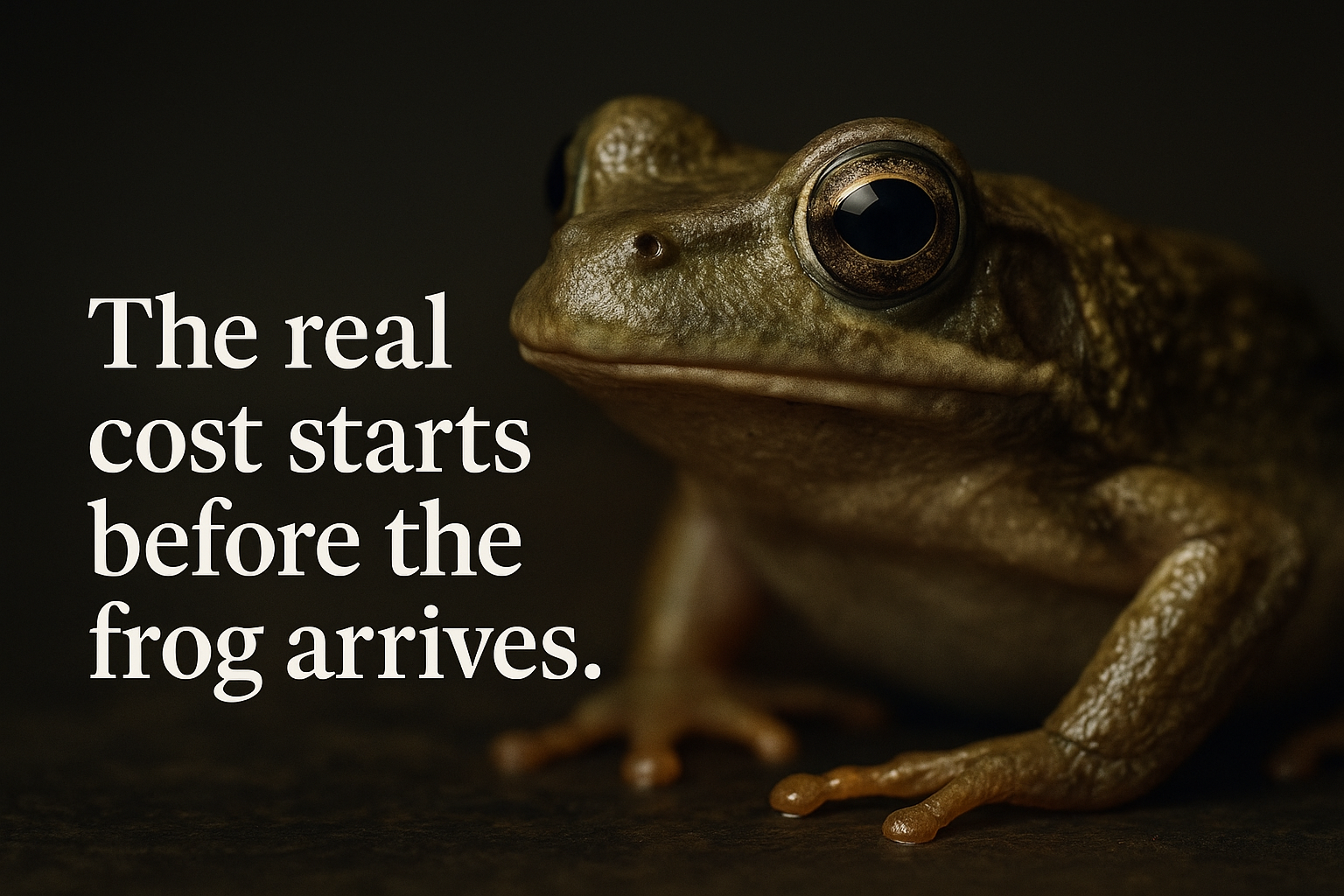
One of the most common misunderstandings in frog keeping is cost. People often focus on the price of the frog itself, assuming that once the animal is bought, the rest is relatively minor.
In reality, the frog is usually the smallest part of the overall cost. The environment, food systems, and long-term maintenance matter far more — both financially and practically.
This article breaks down the real cost of keeping frogs in the UK, based on what actually gets spent over time. It’s written for people researching before they buy, not after problems appear.
The honest short answer
Keeping frogs in the UK is not cheap, but it is predictable.
If you prepare properly and budget realistically, frog keeping is manageable and rewarding. If you rush or underestimate costs, you’ll still spend the money — just later, fixing avoidable problems.
One-off setup costs (where most of the money goes)
The biggest costs come before a frog ever enters the enclosure. A stable setup is not optional for frogs — it is the foundation everything else depends on.
Enclosure and structure
The enclosure itself sets the limits for success. Size, ventilation, and access matter more than appearance.
- Basic vivarium or enclosure: £80–£250+
- Drainage layer, substrate, background materials: £40–£100
If you want a simpler route with fewer missing pieces, properly designed vivarium kits reduce false economy.
Lighting and environmental control
Lighting is primarily for plants and rhythm, not heat. However, poor lighting leads to plant failure, which destabilises the entire system.
- LED plant lighting: £40–£100
- Timers, plugs, basic controls: £20–£40
Plants and bioactive setup
Live plants are not decoration — they help regulate humidity and provide structure and security.
- Plants (initial planting): £30–£80
- Leaf litter, botanicals, hardscape: £20–£50
Most long-term frog setups rely on a functioning clean-up crew. See: microfauna for bioactive vivariums.
Ongoing costs (what people underestimate)
Once the enclosure is built, costs don’t disappear — they simply change form.
Food and live cultures
Frogs rely on live food. That means cultures need to be maintained, replaced, or backed up.
- Fruit fly cultures / feeders: £5–£15 per week
- Culture supplies and replacements: £10–£30 per month
If you’re new to this, read how to feed dart frogs properly — feeding errors cause more failures than people realise.
Supplements and nutrition
Supplementation is not optional. Long-term deficiencies don’t show immediately, but they are devastating when they appear.
- Calcium and vitamin supplements: £20–£40 per year
Electricity and water
These are rarely discussed, but they add up over time.
- Lighting and misting power use: £5–£15 per month
- Water treatment / RO systems (if used): £5–£10 per month
Hidden and irregular costs
These are the costs that catch people out — not because they’re huge, but because they’re unexpected.
- Replacing failed plants.
- Upgrading lighting that wasn’t strong enough.
- Replacing misting components or nozzles.
- Emergency food purchases when cultures crash.
- Expanding or upgrading enclosures as experience grows.
Most experienced keepers recognise this pattern: spending a little more early often saves money later.
So… how much does it really cost?
| Cost type | Typical UK range |
|---|---|
| Initial setup (one-off) | £200–£500+ |
| Monthly running costs | £30–£70 |
| Yearly ongoing costs | £350–£800+ |
The exact figure depends on species, enclosure size, and how efficiently systems are designed — but this is the realistic range for UK frog keeping done properly.
Are frogs more expensive than other pets?
Compared to dogs or cats, frogs are cheaper overall. Compared to many reptiles or fish systems, they sit somewhere in the middle.
The difference is that frogs are less forgiving. You don’t get many second chances with environmental mistakes.
If you’re still deciding whether frogs suit you at all, this article helps set expectations: Do frogs make good pets?
Cost mistakes to avoid
- Buying the frog before the enclosure is ready.
- Under-budgeting for food and cultures.
- Skipping supplements to “save money”.
- Buying cheap equipment that needs replacing quickly.
None of these save money long-term.
Frequently asked questions about frog keeping costs
How much does it cost to keep frogs in the UK?
In the UK, most properly prepared frog setups cost between £200 and £500 for initial setup, with ongoing monthly costs of around £30–£70. The exact figure depends on enclosure size, species, and how efficiently the system is designed.
Is the frog itself the most expensive part?
No. The frog is usually one of the cheapest parts. Enclosures, lighting, live food systems, supplements, and long-term maintenance typically cost far more over time than the animal itself.
Can frogs be kept cheaply?
Frog keeping can be done on a budget, but not by cutting corners. Skipping proper setup, supplements, or reliable food sources usually leads to higher costs later when problems need fixing.
Do frog keeping costs reduce after the first year?
In most cases, yes. Once the vivarium stabilises and food cultures are established, ongoing costs become more predictable and often lower than during the initial setup phase.
Are frogs more expensive to keep than reptiles?
It depends on the comparison. Frogs usually cost less to heat but require consistent humidity, live food, and plant maintenance. They are often cheaper than large reptiles but less forgiving of mistakes.
What costs do new frog keepers usually underestimate?
The most commonly underestimated costs are live food cultures, plant replacement, supplement replenishment, electricity, and emergency replacements when equipment or cultures fail.
What to read next
Bottom line: frog keeping isn’t about chasing the cheapest option. It’s about building a stable system once, maintaining it consistently, and understanding where the real costs actually sit.