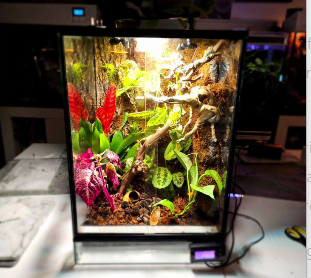

Tomato frogs are chunky, ground-dwelling frogs from Madagascar, named for their bright red-orange colour. They’re relatively undemanding and make excellent display animals for a naturalistic terrestrial terrarium.
Quick Facts
- Common name: Tomato frog
- Scientific names: Often Dyscophus antongilii or Dyscophus guineti
- Adult size: 6–10 cm
- Lifespan: 6–10+ years
- Difficulty: Beginner to intermediate
- Activity: Mostly crepuscular/nocturnal
Natural History
Tomato frogs inhabit moist forest floors and swampy areas in Madagascar. They burrow into leaf litter and soil during the day and emerge at dusk to hunt small invertebrates. Their bright colour is a warning — when stressed, they can secrete sticky toxins from their skin.
Enclosure & Setup
- Minimum size: Around 60 × 45 cm footprint for a single or pair; larger is always better.
- Substrate: Deep, slightly damp soil or coco fibre with leaf litter, allowing shallow burrowing.
- Décor: Cork bark, mossy hides, low plants and plenty of cover. Provide a shallow water dish large enough for the frog to sit in.
Tomato frogs can sometimes be kept in pairs or small groups if space is generous and individuals are well matched. Always monitor for bullying, especially at feeding time.
Temperature & Humidity
- Day temperature: 22–26 °C.
- Night temperature: Can drop to 20–22 °C.
- Humidity: 60–80%. Mist lightly and ensure substrate stays evenly damp but not soggy.
Lighting
Provide a low-level UVB tube across part of the enclosure, plus normal room-level lighting or LED plant lights. Tomato frogs do not need intense brightness and appreciate dim, sheltered spots.
Water & Hydration
- Use dechlorinated water for the dish and misting.
- Change the water daily and clean the bowl regularly.
- Ensure the frog can easily climb in and out of the water dish.
Diet & Feeding
- Main foods: Crickets, roaches, earthworms and other appropriately sized insects.
- Feeding frequency: Juveniles every 1–2 days; adults 2–3 times per week.
- Supplements: Calcium on most feeds, plus a multivitamin once or twice per week.
Feed in the evening to match their natural activity pattern. Remove uneaten insects after a short while so they don’t stress the frog.
Behaviour & Handling
Tomato frogs are strictly “look but don’t touch” pets. When handled or frightened they may inflate, squeak and release a sticky, irritating secretion.
- Avoid handling unless absolutely necessary.
- If handling is required, use clean, wet hands or gloves and keep it brief.
- Never allow children to handle tomato frogs unsupervised.
Common Health Issues
- Skin irritation or sores: Often due to inappropriate substrate or filthy conditions.
- Obesity: Avoid constant heavy feeding.
- Dehydration: Can occur if humidity is too low or water dishes dry out.
Is a Tomato Frog Right for You?
If you like bold colours and a simple, terrestrial setup, tomato frogs are a great option. They suit keepers who are happy to watch, mist and maintain rather than handle, and who can keep on top of substrate changes and water hygiene.