Husbandry & Evidence Review – 6 September 2026
This older White’s tree-frog care sheet has been tightened where enclosure size, UVB lamp percentage and supplement frequency were too prescriptive.
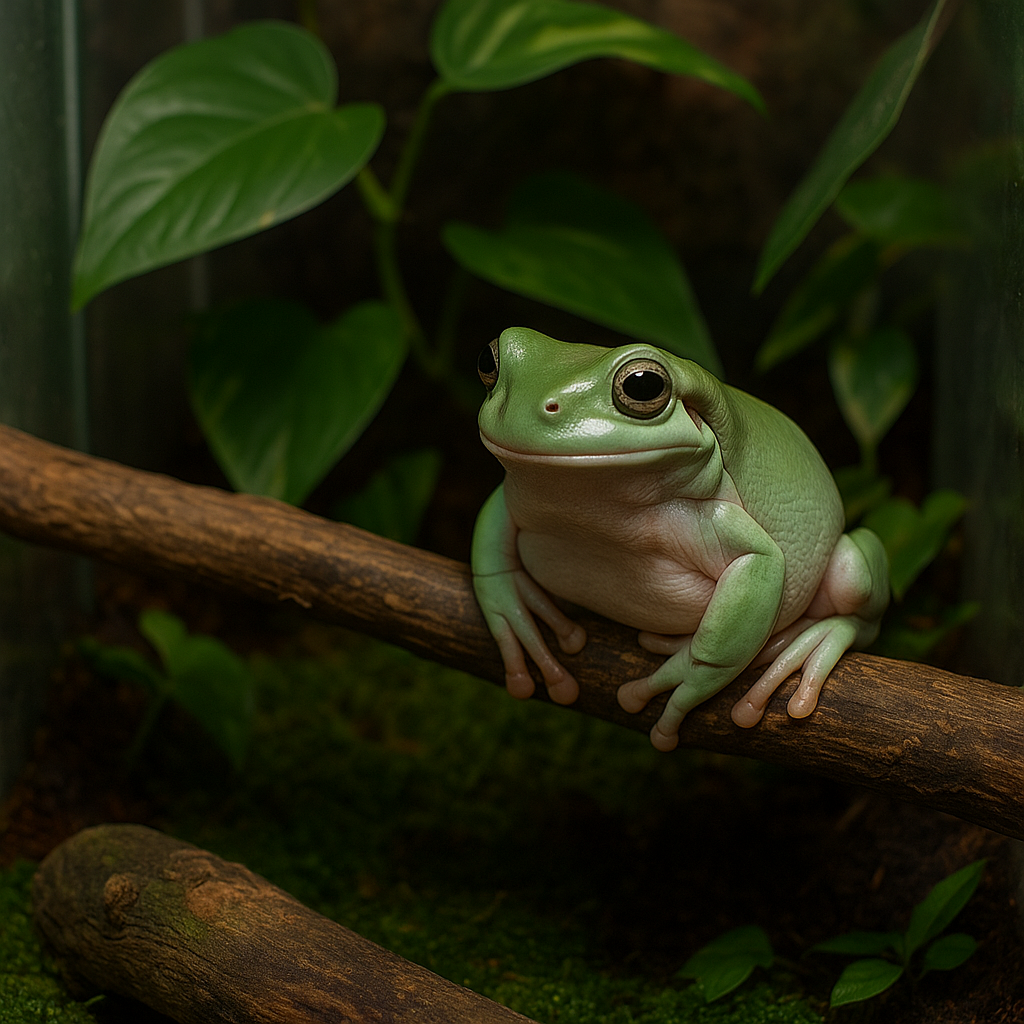
White’s tree frogs, also called dumpy tree frogs or Australian green tree frogs, are one of the most popular pet frogs in the UK. They’re calm, often tolerant of limited handling, and do well in tall, planted enclosures, making them ideal “feature” frogs for a living room vivarium.
Quick Facts
- Common names: White’s tree frog, dumpy tree frog, Australian green tree frog
- Scientific name: Litoria caerulea
- Adult size: 7–12 cm (3–5 inches)
- Lifespan: 10–16+ years in captivity
- Difficulty: Beginner to intermediate
- Activity: Nocturnal, very visible once lights go out
Natural History
White’s tree frogs come from Australia, New Guinea and surrounding areas. They are arboreal, spending most of their time climbing branches, glass and foliage. Their waxy skin helps them tolerate lower humidity than many tropical frogs, which is one reason they’re recommended for newer keepers.
Enclosure & Setup
- A 45 × 45 × 60 cm enclosure should not be presented here as a default for a small group of adult White’s tree frogs; adult number, body size, climbing/perching space and current welfare guidance require a substantially larger usable enclosure for groups.
- Orientation: Vertical height is crucial for climbing space.
- Substrate: Moist coco fibre, soil mix or bioactive substrate with drainage layer.
- Décor: Sturdy branches, cork tubes, vines and broad-leaf plants to rest on. Provide at least one large, easily accessible water bowl.
White’s tree frogs do well in small groups, but avoid overcrowding. Ensure plenty of perches at different heights so individuals can choose their own space.
Temperature & Humidity
- Day temperature: 24–28 °C, with a gentle warm area and cooler spots.
- Night temperature: Around 20–22 °C.
- Humidity: Around 50–70%. Too wet can cause skin issues; allow good airflow.
- Heating: Low-wattage heat lamp or ceramic heater controlled by a thermostat, never pointing directly at plastic plants or frog perches.
Lighting
Provide controlled UVB where used, with complete shade and exposure assessed at frog level. Lamp percentage alone (for example 5–6%) does not specify the UVI reaching the frogs.
Water & Hydration
- Offer a large water bowl with dechlorinated water that the frogs can fully sit in.
- Change water daily; White’s tree frogs often soak and defecate in the bowl.
- Mist the enclosure lightly once or twice a day if needed, focusing on décor rather than directly on the frogs.
Diet & Feeding
- Main foods: Crickets, roaches, locusts, earthworms.
- Occasional treats: Waxworms, butterworms and similar high-fat items offered sparingly.
- Feeding frequency: Juveniles every 1–2 days; adults 2–3 times per week, adjusting to body condition.
- use a coherent formulation-specific supplementation system; a universal 1–2-times-weekly multivitamin rule is not assumed
White’s are prone to obesity. A round frog is normal, but if skin folds and rolls become excessive, reduce feeding and avoid fatty treats.
Behaviour & Handling
White’s tree frogs are robust compared to many other amphibians and will often tolerate short, gentle handling sessions, making them popular with families. That said, they are still sensitive animals.
- Always wash and thoroughly rinse your hands before and after handling.
- Support the frog from underneath; avoid squeezing the body.
- Keep sessions short, and never handle if the frog is shedding, obviously stressed or ill.
Common Health Issues
- Obesity: Very common; monitor weight and adjust diet accordingly.
- Skin infections & “red leg”: Linked to dirty water or poor hygiene; keep the enclosure clean and well-ventilated.
- Metabolic bone disease: risk is reduced through appropriate calcium/vitamin-D3 provision, UVB strategy where used and overall nutrition; no single setup guarantees prevention.
Is a White’s Tree Frog Right for You?
If you want a visible, characterful frog that does well in a lush, vertical vivarium, White’s tree frogs are an excellent option. They suit keepers who enjoy evening observation and are happy to prioritise enclosure design and good hygiene over frequent handling.