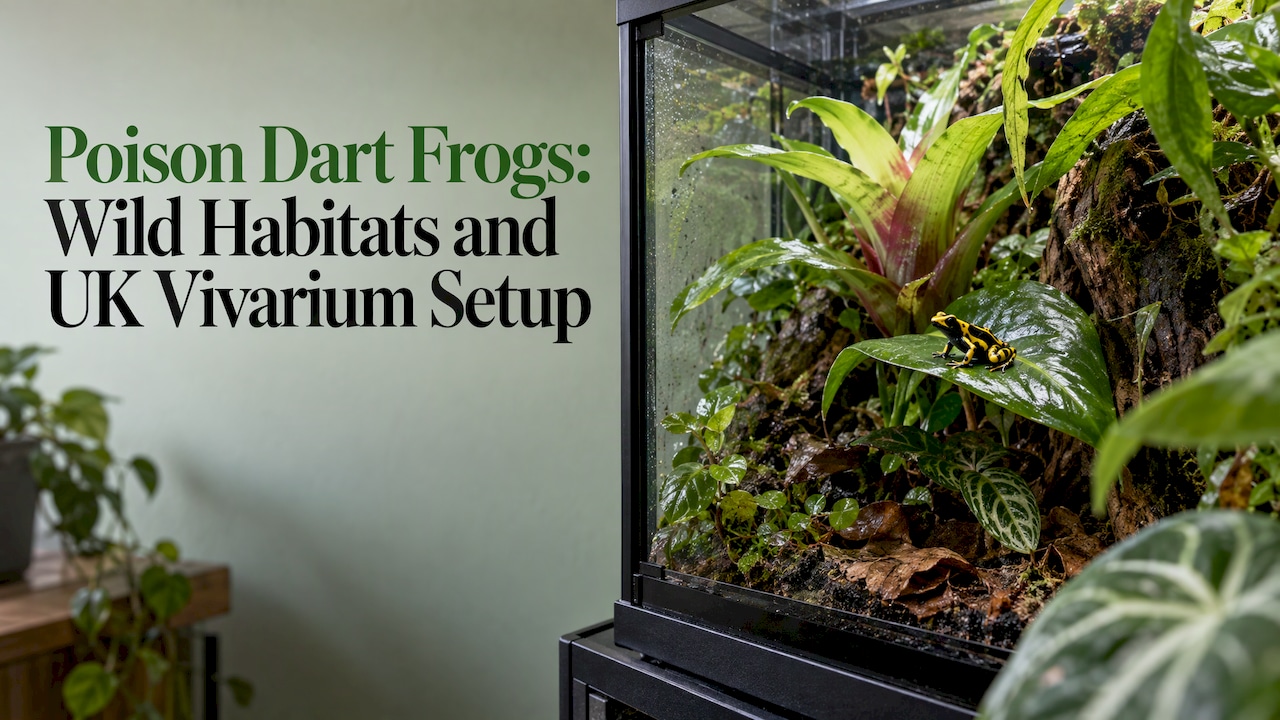
Poison dart frogs live in warm, wet tropical forests of Central and South America, mostly on the forest floor among leaf litter, near streams or pools. Some species climb much higher. Nothing about a good vivarium is guesswork once you understand that: the wild habitat tells you what to build, which species suits which enclosure, and why a tall glass box with a few plants is not the same as a miniature rainforest.
This guide covers where dart frogs come from, how their habitats differ between species, and how we translate that into a UK vivarium. Keeping them well takes steady, observant care, and a bioactive setup still needs regular maintenance.
TL;DR
- Dart frogs are native to warm Central and South American rainforests, usually near streams or ponds.
- Most species live in leaf litter on the forest floor. Some live high in the canopy, so the species decides the enclosure layout.
- Enclosure size alone does not make care appropriate: temperature, humidity and interior structure must suit the species.
- Captive frogs fed ordinary insects are not poisonous, but they still need a varied, properly supplemented diet.
- Choose the species first, then design the vivarium around its natural zone.
Table of Contents
- Where poison dart frogs live in the wild
- What the natural habitat looks like
- Types of dart frogs and how habitat shapes the choice
- Turning habitat into a UK vivarium
- A quick checklist before frogs arrive
- Wild frogs, captive-bred frogs and the law
- Our perspective
- Building your own habitat with Frogfather
- FAQ
- Sources
Where poison dart frogs live in the wild
Poison frogs are found in wet tropical forests in Central and South America. The Smithsonian’s National Zoo describes them as forest dwellers, and keepers there note that frogs can be heard calling in flooded forest. The Los Angeles Zoo summarises the range as humid tropical rainforest from southern Central America to northern South America.
The best-studied group of poison frogs, according to a 2015 review in Current Biology, occurs from Nicaragua to northern South America. That review calls the group a spectacular adaptive radiation. In plain terms, one family has spread into many niches, and each species has its own preferences.
A few examples show how wide that spread is. According to the Los Angeles Zoo:
| Species | Natural range |
|---|---|
| Dendrobates auratus | Costa Rica |
| Dendrobates tinctorius | French Guiana, Surinam and Guyana |
| Dendrobates leucomelas | Venezuela, Guyana, Brazil and Colombia |
| Ranitomeya benedicta | Peru |
| Ranitomeya variabilis | Peru |
| Ranitomeya uakarii | Amazon basin of Peru, Colombia and Brazil |
| Phyllobates terribilis | Colombia |
WebMD’s 2026 guide gives broader ranges for some of the same species, for example Dendrobates auratus from Nicaragua to Colombia and Oophaga pumilio from Nicaragua, Panama and Costa Rica. Sources describe ranges at different levels of detail, so when you are choosing a species, treat the locality of your actual frogs as the useful information. A breeder should be able to tell you where the line originates.
What the natural habitat looks like
The forest floor
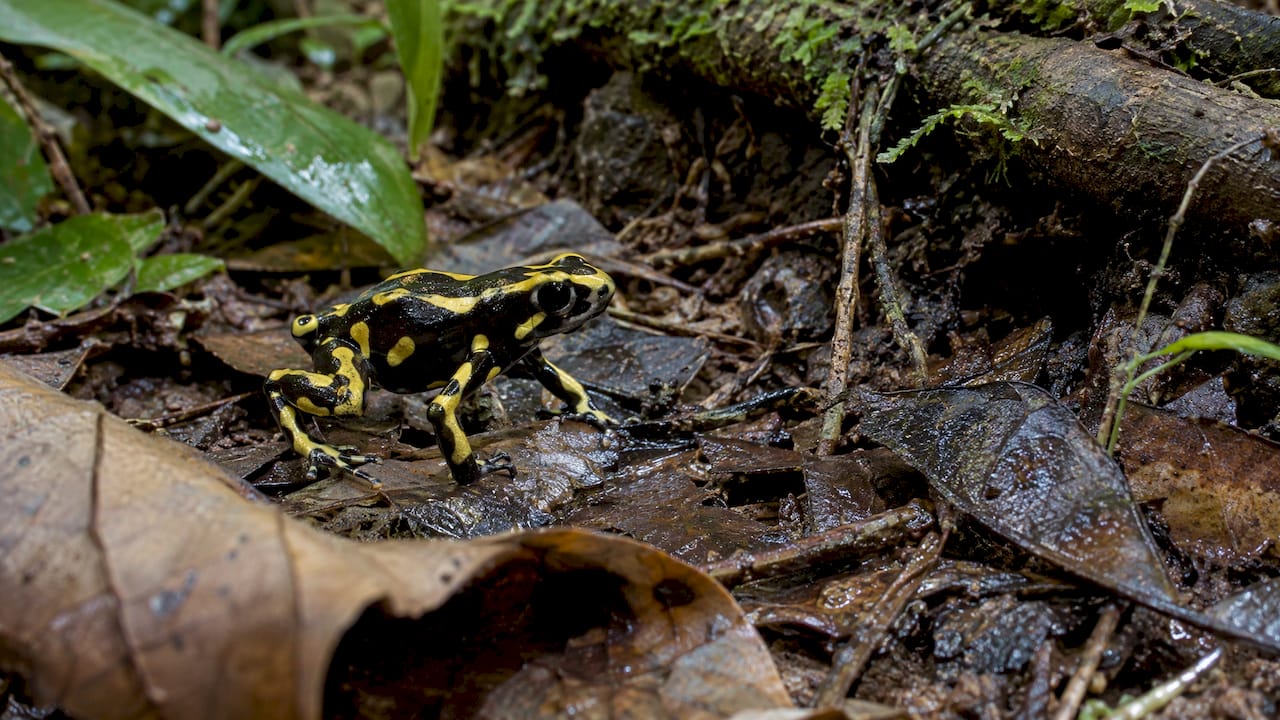
The San Diego Zoo describes poison frogs as tiny, terrestrial and active by day. Most live in leaf litter on the forest floor. That means shade, dampness, hiding places among fallen leaves and roots, and plenty of tiny prey underfoot.
The canopy
Some species live high in the forest canopy, and that changes everything about how you would house them. A frog adapted to life above the ground uses height, branches and plant-held water. Giving it a wide, flat, floor-heavy layout wastes its natural behaviour.
Water, rain and breeding
The Smithsonian’s National Zoo says most species lay eggs in dark, moist leaf litter, while some use bromeliads. In wet tropical rainforest, rainfall is the main factor controlling breeding timing. The Current Biology review adds that parents transport tadpoles to streams, puddles or water held in plants, and some parents feed tadpoles unfertilised eggs.
For a keeper, this explains several things at once: why egg-laying sites matter, why bromeliads and small water-holding spots are so useful in some setups, and why a seasonal rainfall pattern is worth mimicking through your misting routine.
Prey and diet
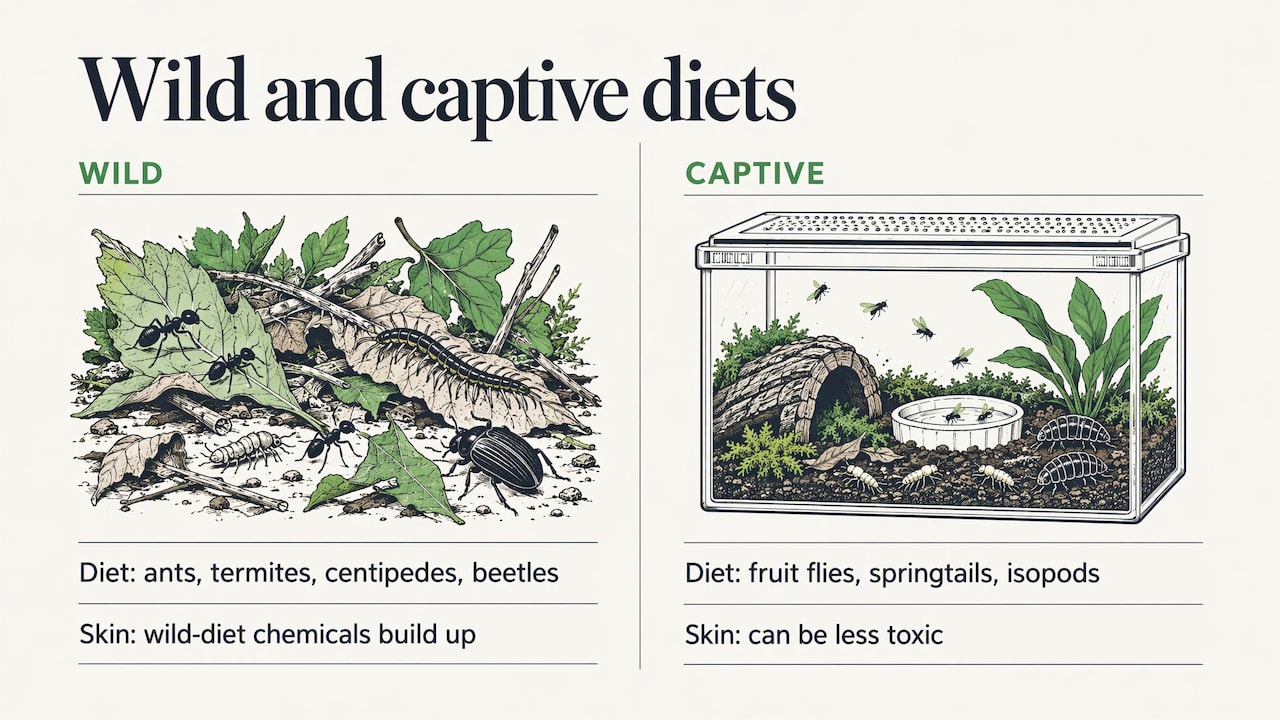
Wild frogs eat ants, termites, centipedes and tiny beetles, according to the San Diego Zoo. The same page explains that chemicals from the wild diet build up in skin glands, so zoo-hatched frogs fed ordinary insects are not poisonous. San Diego Zoo Wildlife Alliance’s keeper account makes the same point: captive frogs can be less toxic because their arthropod diet differs from what they eat in the wild.
That is why a captive diet should be varied rather than a single feeder insect. Flightless fruit flies, springtails and isopods all have a place, and we cover the live-food side further down.
Types of dart frogs and how habitat shapes the choice
People ask how many types of dart frogs there are, and the honest answer is: many, and groupings change as researchers revise them. What matters for a keeper is the practical grouping. The German Association for Herpetology and Ichthyology’s guidelines treat tropical-forest ground-dwelling dart frogs separately from tree- and scrub-dwelling species and from stream-associated species. That tells you enclosure structure should follow the species’ natural zone.
A simple way to think about it:
- Ground dwellers: leaf litter, hides, low cover, a shallow water feature. Lots of floor space matters more than height.
- Climbers and canopy-leaning species: vertical space, branches, broad-leaved plants and bromeliads for perching and water-holding.
- Stream-associated species: a more developed water area with safe, easy exits.
Before you buy, find out which of these your chosen species resembles. Beginners are usually best served by researching one species thoroughly rather than choosing on colour alone.
Turning habitat into a UK vivarium
A vivarium is not a copy of the rainforest. It is a small, controlled system that gives the frog what the rainforest gives it: cover, humidity, prey, water and a sense of security. Here is how we approach it.
Step 1: Pick the species, then the enclosure
The German guidelines are blunt on this point: enclosure dimensions alone do not guarantee biologically appropriate care. Species-specific temperature, relative humidity and interior structure must be considered as well. So size comes after the species, not before. Check a species-specific care sheet from an experienced breeder for the footprint, temperature and humidity ranges that suit your frogs, and plan for the group size you intend to keep.
Step 2: Build the layers
A bioactive setup normally runs from the bottom up:
- A drainage layer so excess water has somewhere to go.
- A barrier layer to keep substrate from washing down.
- A planted substrate that holds moisture without sitting waterlogged.
- A leaf litter layer on top, which doubles as cover and a home for your cleanup crew.
Step 3: Add the cleanup crew
Springtails and isopods break down waste and leaf litter and give frogs something to forage. They are one reason bioactive vivariums work, but they do not replace your own husbandry. Spot-clean, watch for mould, top up leaf litter and keep populations healthy. Our own Microfauna Nutrition Series and microfauna range is designed to support those cultures.
Step 4: Plant for structure and cover
The forest floor is dim and layered, so use plants that create shade and visual barriers. For climbing species, add sturdy perches and bromeliads. Broad leaves give frogs a place to rest and call from. Keep a plant list that suits your light levels and frog species, and introduce plants in stages so the system can settle.
Step 5: Water and humidity
Rainfall is the cue behind natural breeding, so a consistent, observable misting routine is the thing to master. Aim for the humidity range for your species, check it with a reliable hygrometer, and allow the enclosure to dry slightly between mists where the species allows it. Good ventilation and consistent routines matter far more than occasional drastic changes. Stagnant, constantly saturated enclosures are a common beginner problem.
Step 6: Feed and supplement
Draw on the wild diet: small, varied prey. Flightless fruit flies are the staple for many dart frogs, with springtails and other small feeders alongside. Supplementation is part of the routine, not an extra. Our live food range includes fruit fly cultures and subscriptions so cultures are less likely to run low.
A quick checklist before frogs arrive
- Species chosen and researched, including adult size and behaviour.
- Enclosure sized and structured for that species’ natural zone.
- Substrate layers built and plants established.
- Cleanup crew thriving.
- Temperature and humidity stable for several days, not just hours.
- Live food cultures running, with supplements to hand.
- A plan for daily checks and weekly maintenance.
Wild frogs, captive-bred frogs and the law
Habitat loss is the core reason to keep captive-bred animals. The Smithsonian’s National Zoo lists rainforest destruction by fires and farmland, the illegal pet trade and chytrid fungus as threats, and the Current Biology review says many species are threatened by habitat loss, with remaining frogs often persisting in dense but isolated forest patches.
If you are thinking of importing frogs yourself, GOV.UK’s guidance says importing non-native amphibians into Great Britain can involve rules under CITES and other regimes. Its import information note says species covered by CITES may need permits issued in advance, and that permits can take up to 30 days to process. For most keepers, buying UK-bred frogs sidesteps all of that and supports responsible keeping.
Our perspective
We built Frogfather around a simple belief: the wild habitat is the best care sheet there is. When a frog arrives in your home, it brings instincts shaped by leaf litter, rain and thick cover, and our job as keepers is to give it a sensible version of that.
We breed UK dart frogs, build planted bioactive vivariums and design our own 3D-printed accessories in our frog rooms, so the advice here comes from everyday use rather than theory. We would always rather you spend a few weeks getting the basics boringly solid than rush a setup because a frog looks good in a photo.
Bioactive does not mean maintenance-free. It means you are working with a living system that rewards patience, observation and small, steady adjustments. If something looks off, change one thing at a time and watch what happens before fiddling further.
Anthony
Building your own habitat with Frogfather
If you would like a setup that is ready to go, we make custom bioactive vivariums designed around the species you intend to keep. We also supply UK-bred dart frogs, tropical plants, springtails, isopods, supplements, vivarium supplies and our own 3D-printed accessories. Browse the range, and use our free guides and courses if you are still planning.
For cultures that keep your frogs fed, our fruit fly subscriptions are in the live food category.
FAQ
Where do poison dart frogs live?
They live in wet tropical forests across Central and South America, from Nicaragua in the north to northern South America. Most are found in leaf litter on the forest floor near streams or ponds. Some live high in the canopy.
How many types of dart frogs are there?
There are many species, and taxonomy is revised as research continues, so it is better to focus on the species you are actually considering. Common keeper examples include Dendrobates tinctorius, Dendrobates auratus and Ranitomeya species. Each has its own range, size and habitat preference.
Are captive dart frogs poisonous?
No. The San Diego Zoo explains that toxins come from chemicals in the wild diet, so zoo-hatched frogs fed ordinary insects are not poisonous. They still need good hygiene and a varied diet.
What size vivarium does a dart frog need?
It depends on the species and group size. Size is only part of it: guidelines stress that temperature, humidity and interior structure must also suit the species. Ground dwellers need floor space, while climbing species need height and perches.
Do dart frogs need a water feature?
In the wild they are associated with streams, ponds and rainfall, and tadpoles develop in different water sources depending on the species. Many keepers include a small, easy-to-clean water area or water-holding plants, depending on the species. Match it to what your frogs naturally use.
Sources
- Poison frogs, Smithsonian’s National Zoo
- Poison Frogs, Los Angeles Zoo and Botanical Gardens
- Pretty Poison, San Diego Zoo Wildlife Alliance Stories
- Poison Frog, San Diego Zoo Animals & Plants
- Poison frogs, Current Biology
- What Are Poisonous Frogs?, WebMD
- Standard Guidelines for the Captive Keeping of Anurans
- Importing non-native animals, GOV.UK
- Import of pet amphibians information note, GOV.UK
Written with BabyLoveGrowth tools